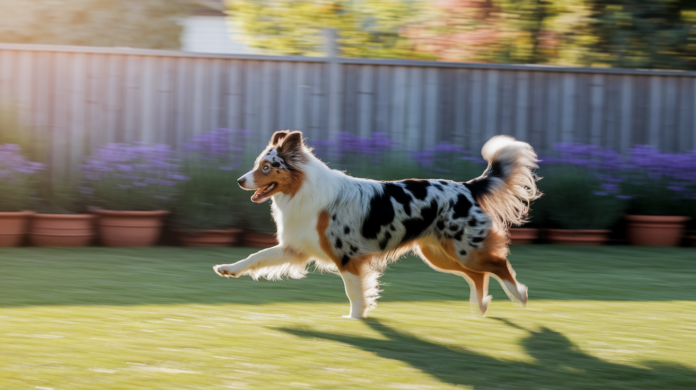

Want a super-smart, fiercely loyal dog that can also shred your schedule?
Australian Shepherds are brilliant, busy herding dogs that bond hard and learn fast.
But that intelligence and energy come with real costs: plan on 60-120 minutes of exercise a day, regular brushing during heavy shed, and paying attention to known health risks.
This honest evaluation lays out clear pros and cons, day-to-day routines, grooming, training, and health, so you can decide yes, no, or not right now for your home and schedule.
Key Australian Shepherd Pros and Cons Explained Clearly

Australian Shepherds are athletic, medium-sized herding dogs known for intense loyalty and impressive intelligence. They form deep bonds with their owners, often following them from room to room, and excel at obedience, agility, and working roles. These dogs were bred to herd livestock, which means they carry strong instincts and high energy that shape daily life.
The breed demands significant time and attention. Most owners report needing 60–120 minutes of physical exercise daily plus 45 or more minutes of mental training to keep their Aussie calm and content. Without adequate outlets, many develop problem behaviors like excessive barking, destructive chewing, or anxious pacing.
Understanding the trade-offs upfront helps you decide whether this breed fits your life. Here’s what you’re actually signing up for:
Pros:
- Highly intelligent and eager to learn, picks up commands quickly
- Loyal and affectionate, bonds intensely with family members
- Versatile working dog, suitable for agility, herding, service, and therapy roles
- Protective and makes an effective watchdog without excessive aggression
- Thrives with active owners who enjoy outdoor activities and dog sports
- Generally good with children when properly socialized and supervised
Cons:
- Requires 1–2+ hours of structured exercise every single day
- Heavy seasonal shedding and needs brushing 2–3 times per week, daily during blowouts
- Prone to separation anxiety and becomes destructive when left alone long periods
- Herding instincts can lead to nipping at heels, chasing bikes, or herding children
- Intelligence leads to mischief and stubbornness if bored or under-stimulated
- Common health risks include hip dysplasia, eye disorders, and MDR1 drug sensitivity
If you skip a walk for two days, what happens in your house? With an Australian Shepherd, you’ll likely find chewed furniture, frantic pacing, or a dog that invents trouble. This breed rewards active, structured households and struggles in low-activity environments. The fit is about your daily routine, not just your love of dogs.
Australian Shepherd Energy Levels and Exercise Demands
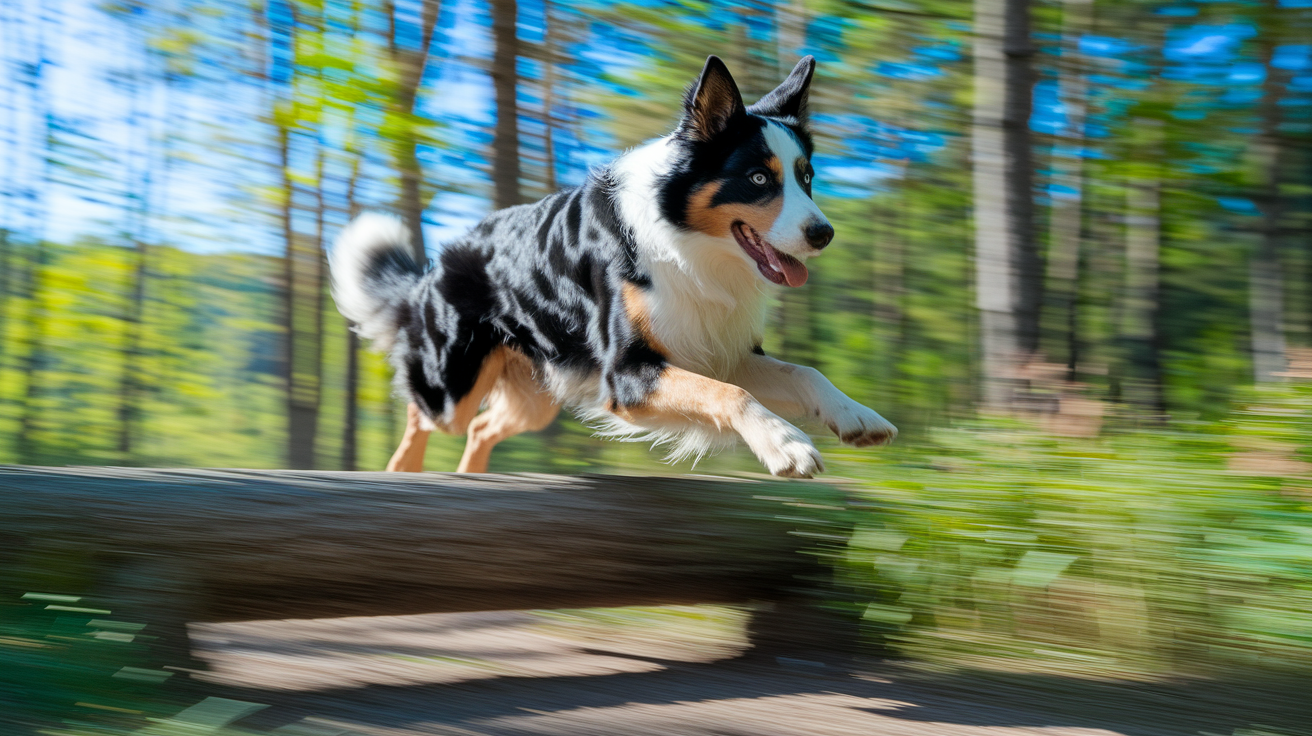
Australian Shepherds were bred to work livestock from sunrise to sunset. That history translates into a dog that expects purposeful activity every day. A short walk around the block won’t touch their energy reserves. Most owners find that 1–2 hours of running, hiking, fetch, agility drills, or herding games is the baseline to keep an Aussie balanced. On top of that, plan for 45 minutes or more of mental work. Scent games, obedience training, puzzle toys. Because a tired brain matters as much as tired legs.
When exercise falls short, behavioral problems arrive quickly. Under-exercised Aussies bark at every sound, dig craters in the yard, shred cushions, or attempt to herd anything that moves, including the vacuum cleaner. Some develop compulsive behaviors like tail chasing or pacing circuits through the house. The receipt you pay for a calm dog is consistent, high-intensity exercise.
Here are five ways to supplement daily exercise and mental stimulation:
- Agility or herding classes that provide structured work and socialization
- Interactive puzzle feeders that turn mealtime into a 20-minute problem-solving session
- Flirt poles or spring poles for high-intensity bursts when outdoor space is limited
- Scent work games where you hide treats or toys and let the dog search
- Fetch or frisbee sessions in a fenced area where the dog can sprint at full speed
If you have a flexible schedule, access to trails or dog parks, and enjoy active hobbies like running or hiking, an Aussie can be your perfect companion. If your weekends are quiet and your evenings are spent on the couch, this breed will struggle. So will you.
Trainability, Intelligence, and Working Instincts in Aussies

Australian Shepherds rank among the smartest dog breeds. They learn new commands in just a few repetitions and retain training for years. This intelligence makes them exceptional candidates for obedience competitions, search and rescue, therapy work, and service roles. Many owners use their Aussie as an emotional support animal because the breed reads human emotion closely and responds with calm, comforting behavior.
Strengths of Aussie Intelligence
Aussies thrive when given a job. They pick up complex tricks, navigate agility courses with precision, and excel at herding trials where split-second decisions matter. Their eagerness to please means they respond well to positive reinforcement, and many enjoy training sessions so much that the work itself becomes a reward. If you want a dog for competitive sports or advanced obedience, few breeds match the Australian Shepherd’s combination of focus, speed, and problem-solving ability. Early socialization and consistent routines help channel their intelligence into productive outlets.
Challenges Caused by Intelligence
Smart dogs get bored easily. And bored Aussies become creative problem-solvers in ways you won’t appreciate. They learn to open cabinet doors, unlatch gates, and figure out that jumping the back fence leads to more interesting adventures. If training stops or routines become repetitive, many Aussies invent their own entertainment, often involving your shoes, the trash can, or the couch cushions.
Their herding instincts add another layer. Aussies may nip at heels, chase running children, or try to “herd” other pets by blocking their movement. This isn’t aggression. It’s instinct. But it requires active management and training to prevent accidental bites or anxious behavior in kids or other animals.
If you’re committed to ongoing training and can provide varied mental challenges, an Aussie’s intelligence is a gift. If you expect a dog to self-entertain or don’t want to invest in regular training sessions, this breed will outsmart you and create problems you didn’t anticipate.
Grooming, Shedding, and Coat Care Pros and Cons

Australian Shepherds have a double coat designed to protect them in all weather. The outer layer is medium length, straight to slightly wavy, and weather resistant. The undercoat is soft and insulating. This coat sheds year-round, with two major blowouts in spring and fall when the undercoat releases in clumps. During those weeks, you’ll find fur on every surface. Black pants, car seats, corners of rooms you didn’t know the dog visited.
Routine grooming involves brushing 2–3 times per week to prevent mats and distribute skin oils. During shedding season, daily brushing is necessary to keep up with the volume of loose fur. Bathing is as needed, usually every 6–8 weeks unless the dog rolls in mud or something worse. Nails grow quickly and need trimming every 3–4 weeks. Ears require regular checks and cleaning because the folded shape traps moisture, increasing infection risk.
| Task | Frequency | Notes |
|---|---|---|
| Brushing | 2–3× per week; daily during shedding season | Use a slicker brush and undercoat rake to prevent mats |
| Bathing | Every 6–8 weeks or as needed | Over-bathing strips natural oils; spot-clean between baths |
| Nail trimming | Every 3–4 weeks | Long nails affect gait and can cause joint pain |
| Ear cleaning | Weekly check; clean as needed | Prevent infection by keeping ears dry and debris-free |
| Teeth brushing | Daily if possible | Reduces periodontal disease and expensive dental cleanings |
The grooming pros are straightforward. The coat is beautiful, low odor when maintained, and functional in cold or wet conditions. The cons are volume and commitment. If you wear dark clothing, own nice furniture, or don’t want to vacuum multiple times a week, the shedding will frustrate you. Grooming isn’t difficult, but it’s non-negotiable. Skipping it leads to painful mats, skin infections, and higher grooming bills when a professional has to shave out tangles.
Health Pros, Cons, and Genetic Considerations in Australian Shepherds

Australian Shepherds generally live 12–15 years, which is a decent lifespan for a medium-sized breed. Many remain active and playful well into their senior years. However, the breed carries a higher than average risk for several inherited conditions, and responsible ownership means budgeting for preventive screening and potential veterinary care.
Hip and elbow dysplasia are common orthopedic issues. These conditions cause joint pain, limping, and reduced mobility, often requiring management with pain medication, weight control, physical therapy, or surgery. Eye disorders are another major concern. Progressive retinal atrophy (PRA) leads to gradual blindness, collie eye anomaly (CEA) affects retinal development, and cataracts can appear in middle age. Epilepsy shows up in some lines and requires lifelong medication. The MDR1 gene mutation makes certain Australian Shepherds dangerously sensitive to common medications, including ivermectin and some anesthetics. Genetic testing identifies carriers so vets can avoid unsafe drugs. Double merle breeding (pairing two merle-coated parents) can produce puppies with severe hearing loss, blindness, or both. Reputable breeders never make this pairing.
Before purchasing or adopting an Australian Shepherd, confirm the following health screenings have been completed:
- Hip and elbow x-rays evaluated by OFA or PennHIP
- Annual ophthalmologist exam to screen for PRA, CEA, and cataracts
- MDR1 genetic test to identify drug sensitivity risk
- Genetic panel for known heritable conditions if available from the breeder
- Cardiac exam if the line has any history of heart issues
- Baseline bloodwork before anesthesia or surgery
- Regular parasite prevention and vaccination per your vet’s schedule
Routine annual veterinary care typically costs $500–$1,200, covering wellness exams, vaccines, heartworm prevention, flea/tick control, and basic labwork. If orthopedic or eye issues develop, expect additional costs ranging from a few hundred dollars for medication and monitoring to several thousand for surgery. Pet insurance premiums for Australian Shepherds often run $40–$80 per month, with higher rates if you include orthopedic and genetic condition coverage.
Choosing a reputable breeder who health tests parents and provides documentation significantly reduces risk. Adopting from a rescue that conducts veterinary evaluations also helps. Either way, factor in the possibility of managing a chronic condition and confirm you can afford both routine and unexpected care before committing to this breed.
Family Fit: How Australian Shepherd Pros and Cons Affect Home Life
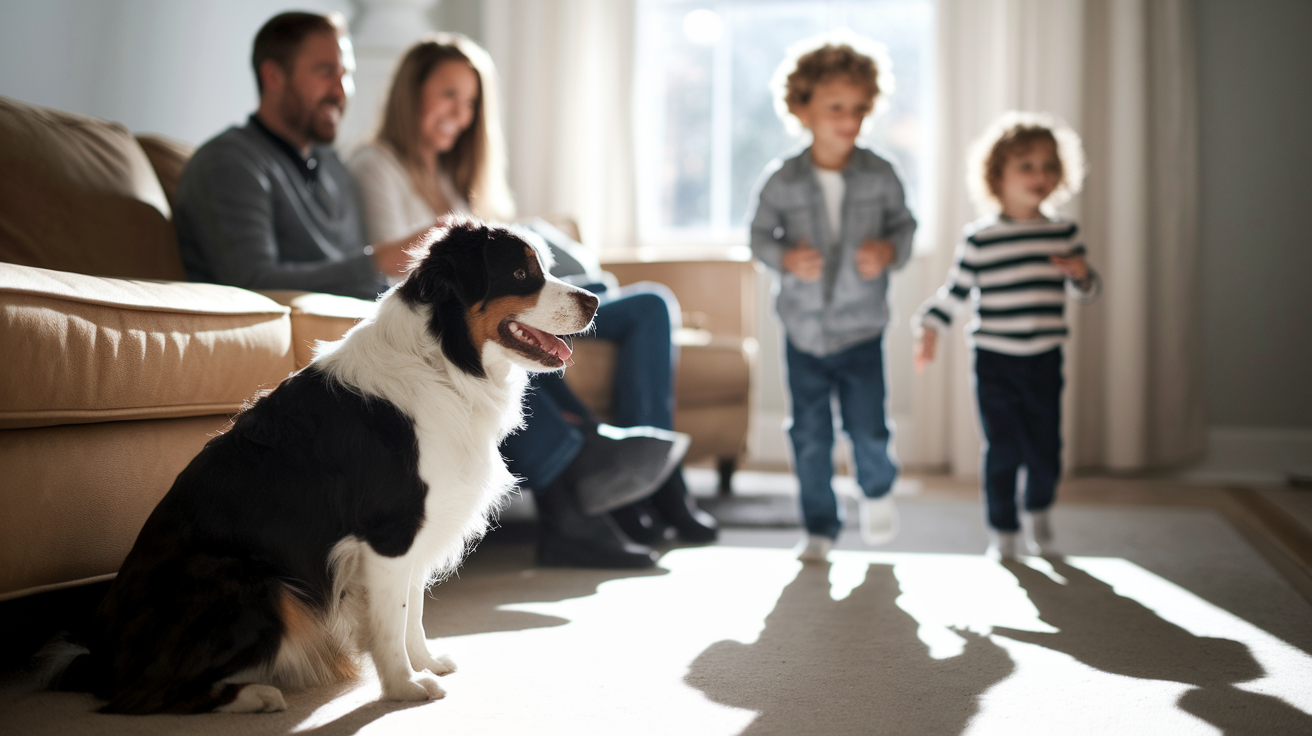
Australian Shepherds are affectionate and protective, which makes them loyal family members. They bond intensely with their people and often shadow their favorite person throughout the day. With proper training and socialization, many Aussies are excellent with children. They tolerate roughhousing better than smaller breeds and enjoy active play. However, herding instincts mean they may nip at running kids, especially toddlers who move unpredictably. Supervision is essential, and teaching children to move calmly around the dog reduces nipping incidents. Older children who can participate in training and exercise often form strong partnerships with Aussies.
Multi-pet households require early socialization. Australian Shepherds can coexist peacefully with other dogs and even cats if introductions are gradual and the Aussie learns impulse control. Some Aussies try to herd smaller pets, which can stress cats or small dogs. If your household includes prey animals like rabbits or chickens, expect management challenges unless the dog is trained specifically for livestock work.
Separation anxiety is the hidden challenge in family life. Aussies don’t do well when left alone for 8–10 hours daily. They may pace, bark nonstop, chew through doors, or have indoor accidents. This breed thrives when someone is home most of the day or when reliable dog walkers, daycare, or pet sitters provide midday interaction.
Here are five situations where Australian Shepherds typically thrive versus struggle:
- Thrive: Active families who hike, camp, or play outdoors together regularly; Struggle: Families who prefer indoor activities and long stretches of screen time
- Thrive: Homes where at least one person works from home or has flexible hours; Struggle: Households where everyone is gone 8+ hours daily without midday care
- Thrive: Families with older children who can help with training and exercise; Struggle: Families with toddlers or infants who lack time for structured dog routines
- Thrive: Homes with other social, active dogs who provide companionship; Struggle: Homes where the Aussie is the only pet and left alone often
- Thrive: Owners who view training and socialization as ongoing projects; Struggle: Families expecting a dog to “figure it out” without consistent guidance
If your household is predictable, active, and someone is usually home, an Australian Shepherd can be a devoted companion. If your schedule is chaotic, everyone is busy, or you need a dog that’s fine being alone all day, this breed will develop anxiety and behavior problems.
Living Space Pros and Cons: Apartment vs. House for Aussies
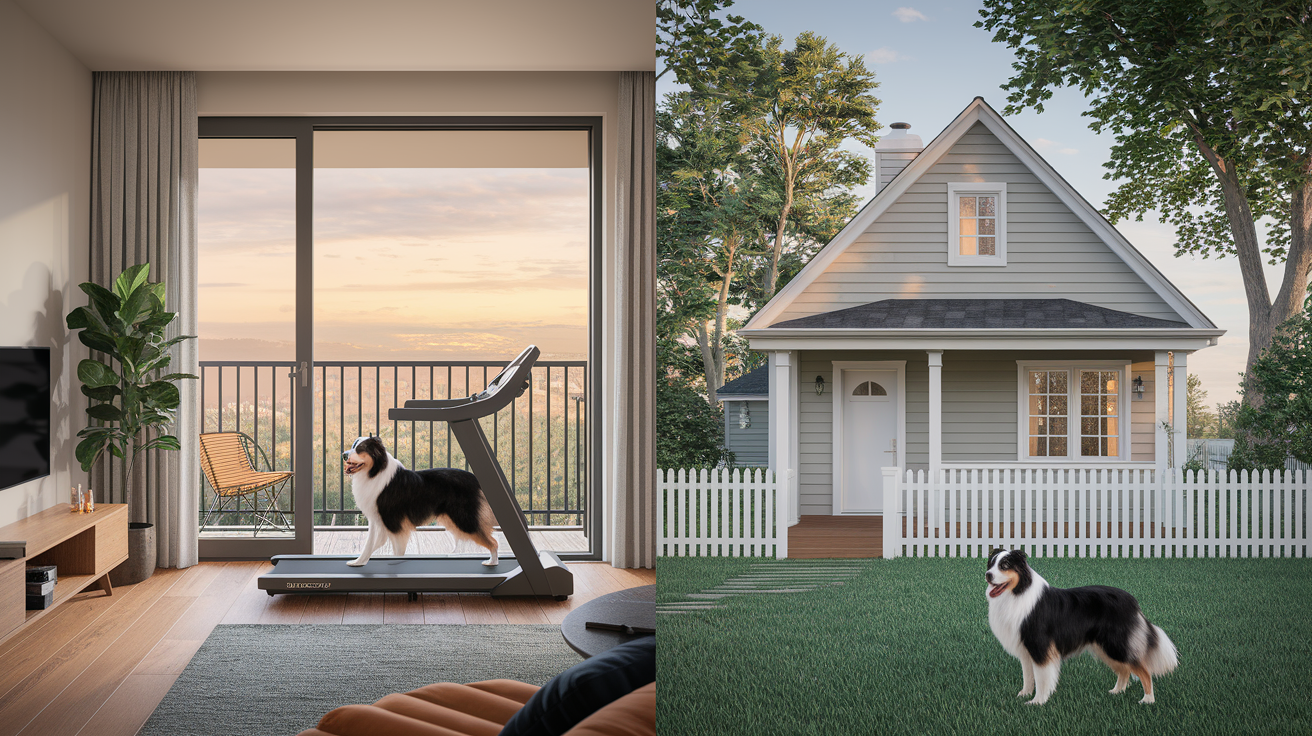
Australian Shepherds can technically live in an apartment, but it requires significant daily commitment. Some owners successfully manage apartment life for the first few months, especially during puppyhood, but only by maintaining strict exercise schedules. Multiple walks, trips to dog parks, and indoor training sessions every single day. Miss a day or two, and the dog’s energy overflows into destructive behavior, loud barking, or frantic pacing. Apartment living also means no quick backyard outlet. Every potty break, every zoomie session, every training drill requires planning and often an elevator ride or stairwell trek.
A house with a fenced yard is far easier. Aussies love to sprint, and having a safe outdoor space where they can burn energy between walks makes daily management much simpler. Even a moderate sized yard gives the dog room to play fetch, practice agility, or simply patrol the perimeter. That said, a yard alone isn’t enough. Australian Shepherds need structured activity, not just time outside. A bored Aussie in a backyard will dig, bark at every noise, or find a way to escape.
Apartment-specific challenges include:
- Noise sensitivity: Aussies are alert watchdogs and may bark at hallway sounds, neighbors, or delivery trucks
- Limited indoor exercise space for games or training when weather prevents outdoor trips
- Stair or elevator trips multiple times daily for potty breaks and exercise
- Potential neighbor complaints about barking or high-energy play sessions
Australian Shepherds thrive in environments that offer easy access to open space. Rural properties, suburban homes with trails nearby, or neighborhoods with large dog parks within walking distance. Urban or apartment settings work only if the owner is prepared to treat daily exercise like a non-negotiable appointment and has backup plans for days when schedules get disrupted.
Cost of Ownership: Financial Pros and Cons of Australian Shepherds
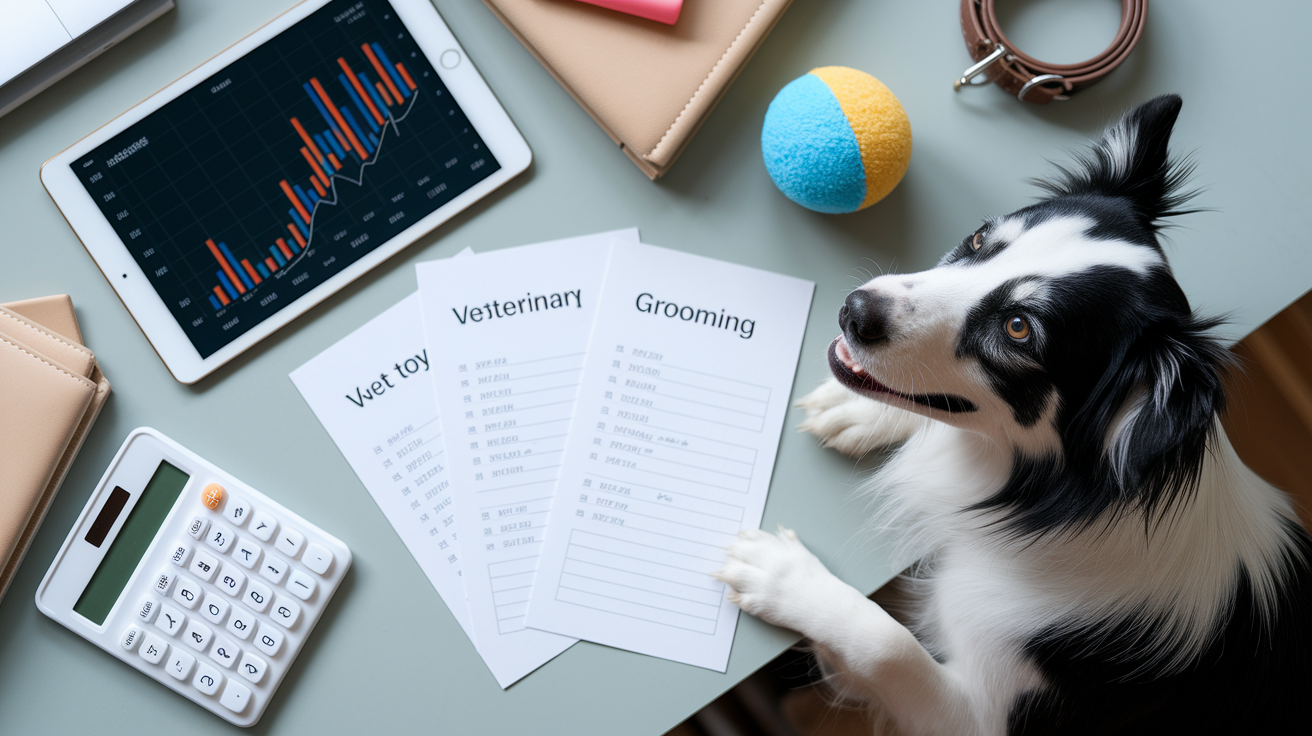
Purchasing an Australian Shepherd from a reputable breeder typically costs $800–$2,500 or more, depending on the breeder’s location, the parents’ competition or working titles, and the health testing completed. Puppies from champion herding or agility lines, or those with rare coat colors, often command higher prices. Adoption from a breed-specific rescue or shelter usually costs $100–$500, which often includes initial vaccinations, spay/neuter surgery, and a basic health check.
First year expenses are the highest because they include one-time costs like crate, leash, collar, bowls, bedding, initial veterinary exams, vaccinations, spay/neuter if not already done, and puppy training classes. Most owners spend $1,000–$3,000 in the first year. After that, annual costs settle into a range of roughly $700–$2,000, covering food, routine vet visits, flea/tick/heartworm prevention, grooming supplies or occasional professional grooming, and training or dog sport fees.
| Category | Typical Cost Range | Notes |
|---|---|---|
| Purchase/Adoption | $100–$2,500+ | Adoption lower; reputable breeders higher |
| First-Year Total | $1,000–$3,000 | Includes supplies, initial vet, training, spay/neuter |
| Annual Routine Care | $700–$2,000 | Food, vet exams, preventives, grooming, training |
| Emergency/Illness | $500–$5,000+ | Hip surgery, eye treatment, or chronic condition management |
Long-term financial planning matters because Australian Shepherds are prone to orthopedic and eye issues that can require expensive intervention. Hip dysplasia surgery, for example, can cost $3,000–$7,000 per hip. Cataract surgery runs $2,500–$4,000 per eye. Ongoing management of epilepsy or allergies adds monthly medication costs. Pet insurance can offset some of these expenses, but premiums for Aussies are often higher due to known genetic risks, and many policies exclude pre-existing conditions or have breed-specific limitations. Budget conservatively and consider setting aside an emergency fund of at least $1,000–$2,000 to cover unexpected veterinary needs.
Who Should (and Should Not) Choose an Australian Shepherd

Ideal Australian Shepherd owners are active, home often, and genuinely enjoy spending 1–2+ hours daily on dog-related activities. They have experience training dogs or are willing to hire professional help. They view exercise and mental stimulation as non-negotiable parts of the routine, not optional extras. These owners often participate in dog sports, work from home, or have flexible schedules that allow midday interaction. They understand that an Aussie is a 12–15 year commitment to high-intensity companionship, and they’re prepared for grooming, veterinary costs, and ongoing training.
Unsuitable situations include:
- Sedentary individuals or families who prefer low-key, indoor lifestyles
- People who work full-time away from home without reliable dog walkers, daycare, or sitters
- First-time dog owners seeking a low-maintenance breed or expecting a dog to self-train
- Households with very young children and no time or energy for structured dog routines
- Owners looking for a guard dog that will be naturally aggressive toward strangers
- Anyone unwilling or unable to budget for regular veterinary care, grooming, and training expenses
Australian Shepherds live 12–15 years. That’s more than a decade of daily exercise, regular grooming, ongoing training, and veterinary care. Over that span, life changes. Jobs shift, families grow, housing situations evolve. But the dog’s needs remain constant. Before choosing an Aussie, confirm that your household can sustain this level of commitment for the long haul, through busy seasons, life transitions, and the dog’s senior years. If you’re not confident you can meet these needs year after year, a different breed is the honest, responsible choice.
Final Words
Right away: Aussies offer big brains, boundless energy, and a tight bond with family.
This post covered their exercise and mental needs, trainability and herding instincts, grooming and heavy shedding, common health watch-outs, and how they fit with kids, other pets, apartments, or homes with yards.
Balancing the australian shepherd pros and cons is simple: if you can give daily activity, consistent training, and regular grooming, an Aussie often becomes a hardworking, affectionate family member.
FAQ
Q: What is Aussie rage syndrome?
A: Aussie rage syndrome is a rare, sudden aggressive outburst in some Australian Shepherds, often unpredictable. Owners should have a vet rule out pain or neurological issues and consult a behaviorist for safety and management.
Q: Do Aussie Shepherds bark a lot?
A: Australian Shepherds often bark more than average due to herding and alert instincts; under-exercised or bored dogs get yappy. Regular exercise, mental work, and consistent training usually cut excess barking.
Q: Is an Australian Shepherd a good house dog?
A: An Australian Shepherd can be a good house dog if you provide 60-120 minutes daily exercise, mental games, and regular grooming; not a fit for long workdays, very small apartments, or owners wanting low-maintenance pets.
Q: What are the #1 issues in Australian Shepherds?
A: The #1 issues in Australian Shepherds are orthopedic problems (hip/elbow dysplasia), merle-related eye and hearing issues, MDR1 drug sensitivity, separation anxiety, high exercise needs, and heavy shedding. Ask for breeder health clearances and vet screenings.