

Sick of the midnight leap that cracks a picture frame?
You can pick a cat that mostly keeps four paws on the floor.
Some breeds are built to stay low—stocky bodies, short legs, or sleepy temperaments—so they rarely launch onto counters or bookshelves.
This post names those breeds (Munchkin, Persian, Exotic Shorthair, British Shorthair, Ragdoll, Scottish Fold), shows what daily life with one looks like—grooming, exercise, health watch-outs—and the trade-offs people often miss.
If you want a calm companion who won’t test your fragile decor, start here.
Breeds With Naturally Low Jumping Tendencies: Your Quick-Answer Guide
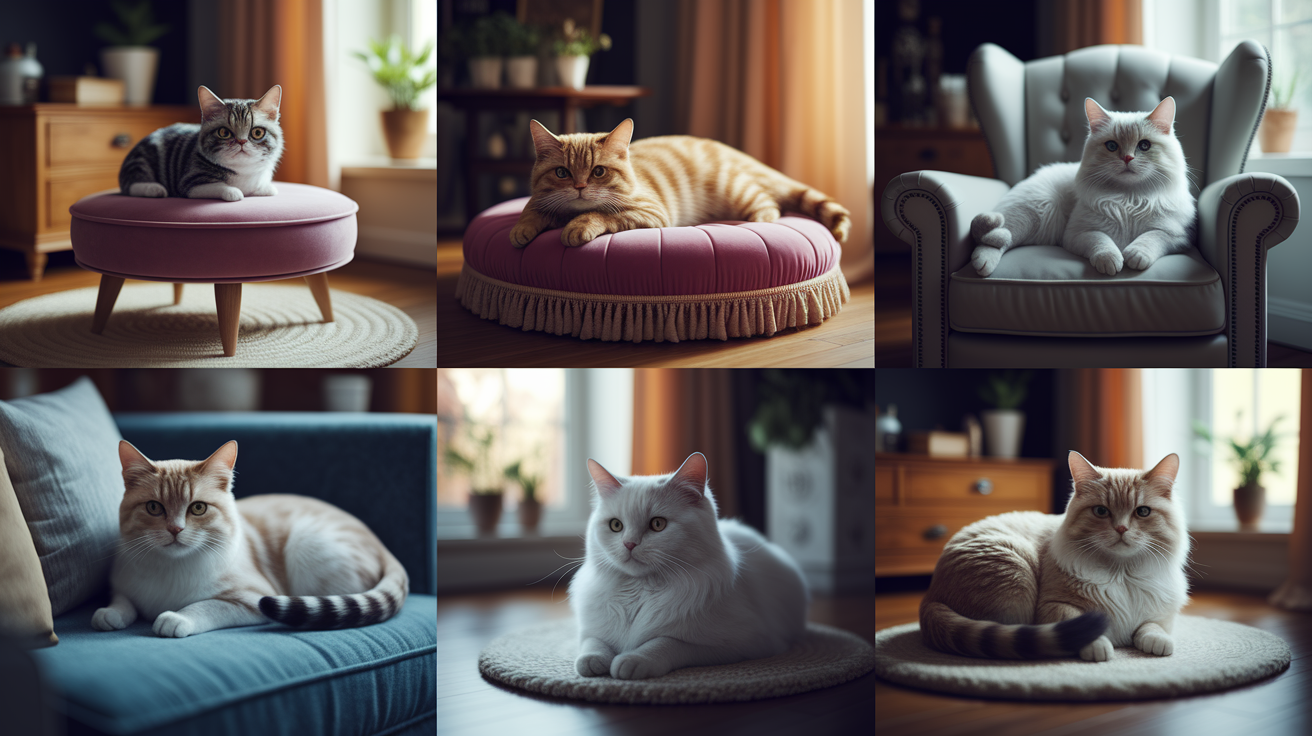
Some cats stay close to the ground by design. The most reliable low jumping breeds share traits that keep them floor focused: heavy, cobby bodies that carry weight poorly through the air, short limbs that limit vertical reach, or temperaments so relaxed that scaling furniture simply doesn’t appeal. A study published in Scientific Reports in May 2019 found that breed accounts for roughly 50 percent of inherited behavioral traits, including activity level. And the differences in jumping behavior between calm breeds and athletic breeds are stark. When a Persian weighs 12 pounds and prefers lounging to leaping, or a Munchkin stands only 6 to 9 inches tall at the shoulder with legs too short to clear a dining chair in one jump, you get cats that max out at about 2 to 3 feet of vertical clearance and choose not to push it.
The top low jumping breeds fall into two camps: those built to stay low (Munchkin, with disproportionately short legs, British Shorthair, stocky and muscular) and those too calm or physically compromised to bother (Persian and Exotic Shorthair, both brachycephalic and sedentary, Ragdoll, famously docile and prone to going limp when picked up). Scottish Folds round out the list with their sweet, minimal energy disposition and preference for laps over ledges. Each breed brings slightly different trade offs in grooming, health risks, and social needs, but all share a tendency to keep four paws on carpet or hardwood most of the day.
These cats suit apartments with breakable decor, homes with elderly or mobility limited owners, and anyone who wants a companion that won’t knock picture frames off the mantle at 3 a.m. They do well in smaller spaces because vertical territory doesn’t matter to them the way it does to climbers. If your worry is countertops, curtain rods, or ceiling fans, these are the breeds that rarely test those boundaries.
Low jumping breeds to consider:
- Munchkin – short legged, ground level movers
- Persian – heavy, brachycephalic, prefers cushions
- Exotic Shorthair – Persian temperament, easier grooming
- British Shorthair – stocky build, calm in adulthood
- Ragdoll – ultra relaxed, stays near people
- Scottish Fold – affectionate, minimal jumping drive
Understanding Why Certain Cat Breeds Jump Less

Jumping ability in cats comes down to a mix of build, temperament, genetics, and health. Breeds with cobby, heavy bodies face the same challenge a weightlifter does trying to do a standing high jump. Muscle and bulk don’t convert efficiently into vertical lift. Brachycephalic cats (those with short, flat faces like Persians and Exotic Shorthairs) often have reduced stamina because their airway anatomy makes sustained exertion harder. Add a naturally low energy temperament and you get a cat that sees a bookshelf and thinks “not worth it.” Research from Scientific Reports in May 2019 confirms breed determines about half of a cat’s behavioral profile, and activity level is one of the traits that varies most sharply between lines. Cats bred for companionship and calm rather than hunting drive simply don’t develop the same leaping reflex.
Some cats also prefer human contact to climbing. Ragdolls and Scottish Folds would rather be on a lap than on top of the fridge. That choice isn’t physical limitation, it’s personality, but the result is the same: low furniture, low counters, low stress. When a cat consistently chooses ground level, you adjust the home around that preference, and daily life gets quieter. That’s the appeal for people in apartments, assisted living, or homes where mobility aids and fragile items occupy floor space.
The top reasons cats jump less:
- Body type – heavy, stocky, or short limbed builds reduce vertical reach and agility.
- Temperament – calm, people focused personalities favor staying near humans over exploring high perches.
- Genetics – breed inheritance accounts for roughly 50% of activity and jumping behavior.
- Health conditions – brachycephaly, joint problems, or age related arthritis can limit stamina and comfort when jumping.
Profile Overview of Popular Low Jumping Cat Breeds

Persian
Persians weigh between 7 and 12 pounds, carry a long, dense coat, and have brachycephalic skulls that give them their signature flat faces and big eyes. The short nose reduces airflow efficiency, so stamina drops quickly during exertion. Most Persians would rather nap on a low bed than scale a cat tower, and their body composition (stocky, with short legs relative to torso length) makes jumping awkward. They’re built for stillness and human contact, not athletics.
- Jumping tendencies: Very low. Prefer ground level lounging and rarely attempt jumps above 2 feet.
- Grooming: Daily brushing required to prevent mats, weekly face cleaning to manage tear staining.
- Ideal home type: Quiet indoor apartments or houses with owners willing to commit to grooming and low activity companionship.
Exotic Shorthair
Think of the Exotic Shorthair as a Persian with a practical haircut. They share the same flat face, calm disposition, and preference for laps, but the shorter coat cuts grooming from daily to two or three times a week. Weight ranges from 7 to 12 pounds, and the body is similarly cobby and compact. Exotics are slightly more curious than Persians but still sedate. They might investigate a low shelf but won’t attempt the top of the bookcase.
- Jumping tendencies: Low. Docile and ground focused, with occasional interest in stable, reachable perches.
- Grooming: Moderate. Brushing 2 to 3 times per week and weekly face care.
- Ideal home type: Apartments, small homes, families wanting a calm cat without high grooming commitment.
British Shorthair
British Shorthairs are dense, muscular cats that can weigh anywhere from 9 to 18 pounds, with males at the heavier end. Kittens may be playful, but adults settle into a markedly sedentary routine, content to observe from a low perch or the floor. Their build is stocky, with thick legs and a round face, and while they’re physically capable of jumping, they rarely choose to. The breed’s temperament leans toward quiet companionship rather than high energy exploration.
- Jumping tendencies: Low to moderate in youth, very low in adulthood. Prefers stable surfaces and avoids high furniture.
- Grooming: Weekly brushing for the short, dense coat, may need 2 to 3 times per week during seasonal shedding.
- Ideal home type: Apartments, houses with calm routines, owners who appreciate an independent but present companion.
Ragdoll
Ragdolls are famously relaxed cats that often go limp when picked up, hence the name. They’re mid to large in size, gentle, and highly affectionate without being clingy. Ragdolls prefer staying near people on couches, beds, or the floor, and they don’t have the drive to claim vertical territory the way some breeds do. They tolerate children and other pets well, making them popular family cats, but their long coat requires regular grooming to prevent tangles.
- Jumping tendencies: Very low. Prefers ground level or low furniture and stays close to family members.
- Grooming: Regular brushing (several times per week) to manage the semi long coat.
- Ideal home type: Indoor only homes, families with kids or other pets, lap cat seekers who want a calm, cuddly companion.
Scottish Fold
Scottish Folds are recognizable by their folded ears and sweet, wide eyed expressions. They’re small to medium in size, affectionate, and have minimal jumping drive. Most Scottish Folds are content to sit near you rather than climb over you, and their activity level trends low throughout life. They’re social enough to enjoy company but not demanding, which suits quieter households and owners who work from home.
- Jumping tendencies: Minimal. Calm and lap focused, with little interest in high places.
- Grooming: Short haired Folds need weekly brushing, long haired variants need 2 to 3 times per week.
- Ideal home type: Apartments, smaller homes, owners wanting a low energy companion with a gentle disposition.
Comparing Low Jumping Breeds by Key Traits

The table below organizes the top low jumping breeds by the factors that matter day to day: how much they move, how much grooming they need, what health issues to watch, and where they fit best. Use this to narrow your list before visiting shelters or breeders.
| Breed | Jumping Tendency | Weight | Lifespan | Grooming Frequency | Activity (min/day) | Health Considerations | Ideal Home Type |
|---|---|---|---|---|---|---|---|
| Persian | Very low | 7–12 lb | 12–17 years | Daily | 15–30 | Brachycephalic breathing, tear staining, dental crowding | Indoor apartment, lap focused owner |
| Exotic Shorthair | Low | 7–12 lb | 11–15 years | 2–3×/week | 15–30 | Brachycephalic issues, tear staining | Apartment, small home, calm household |
| British Shorthair | Low | 9–18 lb | 12–20 years | 1×/week | 30–45 | Obesity risk, hypertrophic cardiomyopathy | Apartment or house, independent owner |
| Ragdoll | Very low | 10–20 lb | 12–17 years | Several ×/week | 20–30 | Heart issues in some lines, requires indoor only | Family home, indoor only, lap cat household |
| Scottish Fold | Minimal | 6–13 lb | 11–15 years | 1×/week (short), 2–3×/week (long) | 15–25 | Joint issues related to cartilage mutation | Quiet home, smaller space, gentle routine |
Weight and grooming time are two of the biggest surprises for new owners. A 12 pound Persian needs daily brushing or you’ll spend more time cutting out mats than you will petting the cat. British Shorthairs are low maintenance on grooming but high risk for weight gain if you free feed. Ragdolls look delicate but can hit 20 pounds, and they need regular coat care despite being calm. Budget grooming time and vet costs into your decision, not just personality.
Home Setup Tips for Cats That Prefer Staying on the Floor
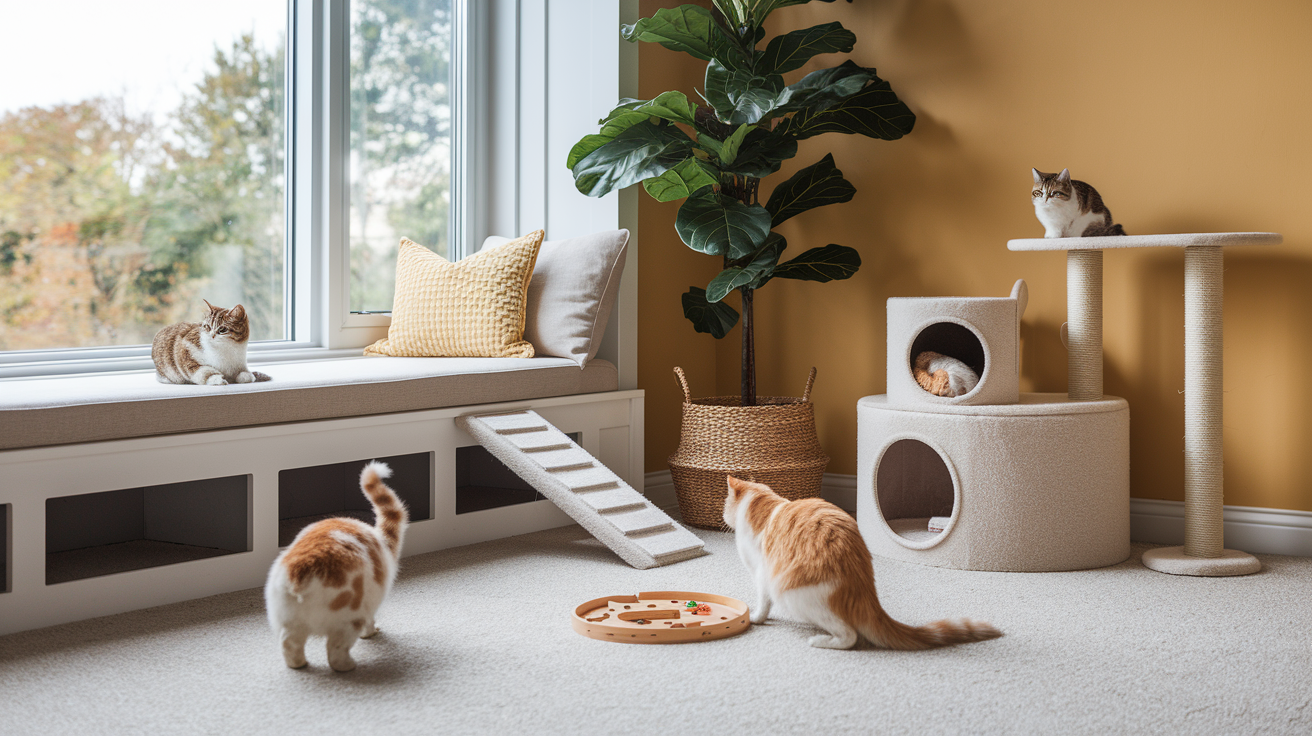
Low jumping cats still need enrichment, but vertical space isn’t the answer. Instead, focus on wide, stable surfaces at accessible heights and ways to make ground level life interesting. A cat that can’t or won’t jump to a window perch will still want to look outside, so a low, sturdy ottoman next to a ground floor window works better than a tall tower. Ramps and wide stairs let cats with short legs or heavy builds access beds and couches without strain, and they reduce joint stress for older or brachycephalic cats who tire quickly.
Floor level feeding stations, litter boxes, and beds should be the default. Munchkins, with legs only 6 to 9 inches long, struggle with high sided litter boxes and raised food bowls. British Shorthairs and Persians, already prone to weight gain, shouldn’t have to expend energy just to reach their food. That energy should go into play. Speaking of play, aim for 15 to 30 minutes per day of interactive ground level activity using wand toys, puzzle feeders, or slow rolling balls. These cats won’t chase a toy up a cat tree, but they’ll happily bat at something on carpet.
Setup ideas for low jumping cats:
- Ramps or wide pet stairs next to beds, couches, and window perches to eliminate jumping.
- Low, stable shelves or benches (12 to 18 inches high) for safe perching without strain.
- Ground level window seats using cushions or pet beds placed on the floor near windows.
- Wide, low sided litter boxes to accommodate short legs and reduce entry effort.
- Puzzle feeders and slow feed bowls at floor height to add mental stimulation during meals.
- Carpeted or non slip surfaces near food, water, and resting spots to prevent slipping on hard floors.
Health & Weight Management for Low Activity Cat Breeds
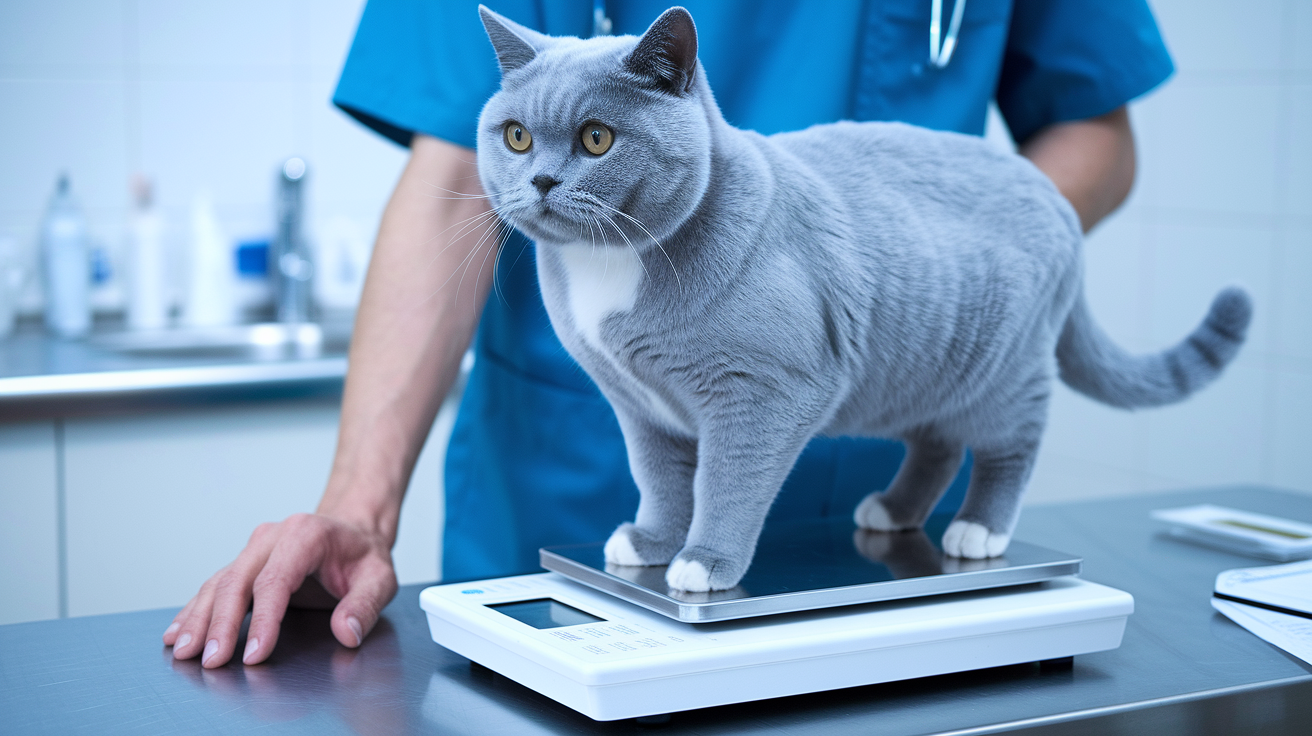
Low activity cats face one major risk: obesity. When a cat burns fewer calories through movement, portion control becomes the primary tool for maintaining healthy weight. British Shorthairs, already heavy boned and muscular, can easily tip into overweight if free fed. Persians and Exotic Shorthairs, with their sedentary habits, need measured meals and scheduled feeding times. A bathroom scale works fine for tracking weight at home. Weigh yourself, then weigh yourself holding the cat, and subtract. If the number creeps up steadily, cut portions by 10 percent and recheck in two weeks.
Brachycephalic breeds (Persian, Exotic Shorthair) require regular monitoring for breathing trouble, dental crowding, and tear staining. Annual vet exams catch these issues early, but biannual checks are safer if your cat shows any respiratory noise during play or grooming. Munchkins may develop spinal or joint problems tied to their dwarfism, so mobility checks every 6 to 12 months help catch early signs of discomfort. British Shorthairs have a genetic predisposition to hypertrophic cardiomyopathy in some lines, so ask breeders about cardiac screening and consider an echocardiogram if your vet hears a murmur.
When Reduced Jumping Signals a Problem
Not all low jumping is breed related. If a previously active cat suddenly stops jumping, or if a low jumping breed seems reluctant to move even on flat ground, that’s a red flag. Arthritis, injury, and pain don’t always show up as limping. Cats hide discomfort, and a quiet withdrawal from normal movement is often the only clue.
Signs that reduced jumping may indicate a health issue:
- Sudden change in behavior – a cat that used to jump onto the couch now avoids it entirely, or hesitates and turns back.
- Stiffness after rest – slow to stand up after naps, or walking carefully for the first few steps before loosening up.
- Vocalization or flinching – growling, hissing, or pulling away when touched near the hips, spine, or legs, reluctance to be picked up.
Choosing and Adopting a Low Jump Cat
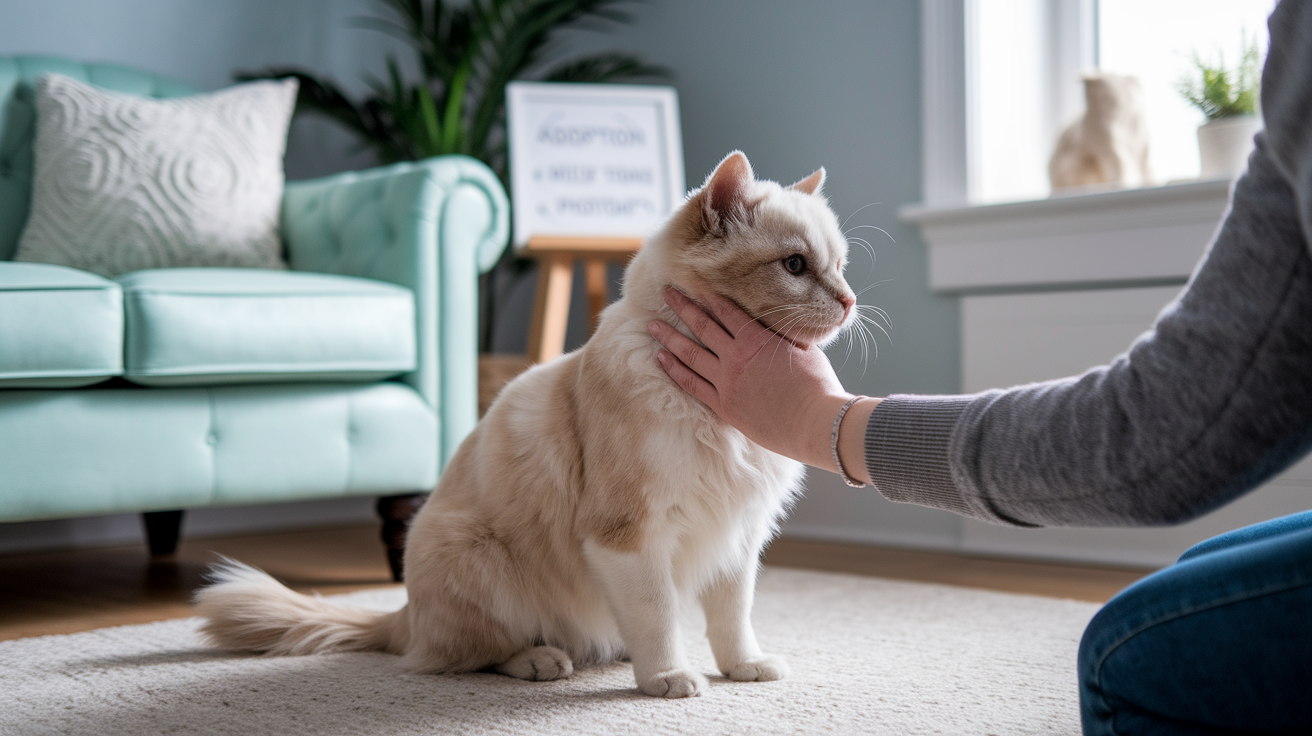
Adult cats show you exactly who they are. Kittens of any breed can be bouncy and unpredictable, but a three year old British Shorthair or Persian has settled into a stable routine, and shelter staff can tell you whether that cat spends the day napping or pacing. If you want a genuinely calm, low jumping cat, adopting an older cat from a shelter or rescue is one of the most reliable routes. Age is a stronger predictor of activity level than breed alone, and a senior cat (seven years or older) will almost always prefer ground level life to climbing.
When buying from a breeder, ask about health screenings specific to the breed. Persians and Exotics should have documentation of respiratory and eye health. British Shorthairs should come from lines screened for hypertrophic cardiomyopathy. Munchkins should have clear spinal and joint evaluations. Adoption fees for purebred rescues typically range from $100 to $300. Breeder prices vary widely. Persians run $500 to $2,500, Exotic Shorthairs $800 to $2,000, British Shorthairs $800 to $2,000, and Ragdolls $800 to $2,000, depending on pedigree and region. Munchkins, due to their rarity, often cost $700 to $1,500.
Questions to ask breeders or shelters:
- What is this cat’s daily routine? – how much time sleeping, how much time active, and where does the cat spend most of the day?
- Does this cat jump onto furniture or counters? – if yes, how high, and how often?
- What health screenings have been completed? – ask for documentation, especially for brachycephalic or cardiac issues.
- How does this cat react to being alone? – some low activity cats (like Ragdolls) are calm but don’t tolerate solitude well.
- What is the grooming history? – has the cat been brushed regularly, and how does it react to grooming tools?
Final Words
You now have the key takeaways: which breeds tend to stay low, the body-and-temperament reasons behind it, and practical home and health tips.
We named the top low-jumping breeds (Munchkin, Persian, Exotic Shorthair, British Shorthair, Ragdoll, Scottish Fold), compared their needs, and gave apartment- and senior-friendly setup ideas.
If you want a calm, ground-level companion, focus on those cat breeds that don’t jump much and check health and weight with your vet. With a bit of planning, you’ll have a relaxed, content cat in your home.
FAQ
Q: What breed of cat doesn’t like to jump?
A: The breed of cat that doesn’t like to jump is often a heavy or low-energy type—Munchkin, Persian, Exotic Shorthair, British Shorthair, Ragdoll, and Scottish Fold tend to stay low and jump little.
Q: What is the 3-3-3 rule for cats?
A: The 3-3-3 rule for cats is a new-pet guideline: 3 days of initial shock, 3 weeks to settle into routine, and about 3 months to fully adjust and bond and be reliably housetrained.
Q: What is the calmest cat breed and what is the easiest cat to raise?
A: The calmest cat breed is often the Ragdoll; Persians, British Shorthairs, and Exotic Shorthairs are also gentle and among the easiest to raise, fitting apartments, seniors, and low-activity homes.