
Think any cat will be fine in a tiny apartment? Think again.
Some breeds get bored, noisy, or destructive when space is tight.
The right cat changes daily life: less noise, fewer late-night zoomies, and less fur on your black pants.
This guide names calm, quiet companions—Ragdoll, British Shorthair, Chartreux and more—and explains what fits your routine.
You’ll learn real trade-offs: exercise needs, grooming time, and how vocal they are, so you can make a clear yes, no, or not right now.
Key Apartment-Friendly Cat Traits to Know Before Choosing a Breed

The best apartment cats share a few practical traits that make daily life easier when you’re working with limited space. Most score between 1 and 3 on activity level. That means they’re happy with short play sessions and lots of nap time. They also tend to score 1 or 2 on vocalization, so thin walls and close neighbors won’t become an issue. Grooming matters too. Short-haired breeds shed less and need minimal brushing, which keeps fur off your clothes and cuts down on cleanup in a studio or one-bedroom.
Adaptability is the trait that matters most. Cats who are naturally indoor-focused, unbothered by limited floor space, and happy to use vertical perches instead of roaming wide open rooms will settle in faster. Breeds like the British Shorthair, Russian Blue, and Chartreux check all these boxes without drama. Even larger cats like the Ragdoll can thrive in apartments because their temperament is so mellow. They’d rather be on your lap than pacing the perimeter.
If you skip a day of play or your schedule changes, you want a cat who adjusts without inventing trouble. That’s what separates a good apartment match from a cat who’s climbing your curtains by Tuesday.
Traits to prioritize when choosing an apartment cat:
- Quiet or low vocalization (score 1–2) to avoid noise complaints
- Low to moderate activity level (score 1–3) so daily needs fit your routine
- Indoor adaptability. Comfortable staying inside without constant stimulation
- Minimal shedding or manageable grooming to reduce cleaning load
- Friendly or independent temperament that suits your social schedule
- Low space requirements. Happy with vertical perches instead of square footage
Best Cat Breeds for Apartments: Top 10 Options With Key Traits

These ten breeds consistently show up in apartment-friendly recommendations because their daily needs, noise levels, and temperaments match small-space realities.
1. Ragdoll
Extremely docile and people-oriented. Activity level: 2. Vocalization: 2. Weekly brushing for semi-long coat. Weight: 10–20 lb. Lifespan: 12–17 years. Ragdolls prefer human contact over exploration, so they’ll follow you from room to room rather than pacing for space. Despite their size, they’re couch potatoes who adapt well to studio layouts.
2. British Shorthair
Calm and independent. Activity: 2. Vocalization: 1–2. Biweekly brushing. Weight: 9–18 lb. Lifespan: 12–20 years. One of the quietest breeds on this list. They’re content to entertain themselves during your workday and won’t demand constant interaction. Their plush short coat sheds minimally compared to long-haired breeds.
3. Russian Blue
Reserved but affectionate once they know you. Activity: 2–3. Vocalization: 1. Weekly brushing. Weight: 7–12 lb. Lifespan: 10–20 years. Exceptionally quiet and low maintenance. Their short, dense coat produces less dander, which can help (but not eliminate) allergy concerns. They’re happy alone during the day and gentle with routines.
4. Exotic Shorthair
Placid and gentle. Basically a Persian temperament in a short coat. Activity: 2. Vocalization: 1–2. Weekly to biweekly brushing, plus facial care needed due to flat face. Weight: 8–12 lb. Lifespan: 10–15 years. They lounge more than they roam. Watch for breathing issues common in brachycephalic (short-nosed) breeds and keep up with eye and facial cleaning.
5. Scottish Fold
Sweet and quiet. Activity: 2–3. Vocalization: 1–2. Low to moderate grooming depending on coat length. Weight: 6–13 lb. Lifespan: 11–15 years. Their signature folded ears and mellow personality make them popular apartment companions. They’re social without being clingy and handle alone time well.
6. Chartreux
Calm and loyal. Activity: 2. Vocalization: 1. Weekly brushing. Weight: 7–15 lb. Lifespan: 12–15 years. One of the quietest breeds. Some owners describe them as nearly silent. They bond closely with their people but aren’t needy. Their short, water-repellent coat is easy to maintain.
7. Persian
Very mellow and sedentary. Activity: 1–2. Vocalization: 1. Daily brushing required, sometimes monthly bathing. Weight: 7–12 lb. Lifespan: 10–15 years. If you want a cat who naps 18 hours a day, this is it. The trade-off is grooming. Persians need daily brushing and regular facial cleaning to prevent matting and tear stains. Budget time or money for grooming.
8. Sphynx
Affectionate and attention-seeking. Activity: 3. Vocalization: 2–3. Weekly bathing and regular ear cleaning. Weight: 6–12 lb. Lifespan: 8–14 years. Hairless means no shedding, but their skin produces oils that need weekly baths. They’re heat-seekers who’ll burrow under blankets or stick to you for warmth. More vocal and social than most breeds on this list.
9. American Shorthair
Adaptable and even-tempered. Activity: 2–3. Vocalization: 1–2. Monthly to weekly brushing. Weight: 8–15 lb. Lifespan: 15–20 years. One of the longest-lived breeds. They’re easygoing, healthy, and happy with moderate play. A solid all-around choice if you want predictable, low-drama companionship.
10. Burmese
Affectionate and social. Activity: 3. Vocalization: 3. Weekly brushing. Weight: 6–12 lb. Lifespan: 10–16 years. Burmese cats are more interactive than most on this list. They’ll seek you out for play and conversation. Moderate vocalization means they’re chattier than a Russian Blue but not Siamese-level loud. Best for owners who want an involved, people-focused cat.
Apartment Cat Breed Comparison Snapshot for Quick Decisions

Use this table to compare noise, energy, and grooming at a glance. If you share walls with neighbors, stick with vocalization scores of 1 or 2. If you’re out ten hours a day, prioritize activity scores of 1 or 2.
| Breed | Activity (1–5) | Vocalization (1–5) | Grooming Level | Ideal For |
|---|---|---|---|---|
| Ragdoll | 2 | 2 | Weekly brushing | Families, lap-cat lovers |
| British Shorthair | 2 | 1–2 | Biweekly brushing | Quiet buildings, busy schedules |
| Russian Blue | 2–3 | 1 | Weekly brushing | Allergy-conscious, solo owners |
| Exotic Shorthair | 2 | 1–2 | Weekly + facial care | Low-energy households |
| Scottish Fold | 2–3 | 1–2 | Low to moderate | Gentle families, first-time owners |
| Chartreux | 2 | 1 | Weekly brushing | Quietest option, thin walls |
| Persian | 1–2 | 1 | Daily brushing | Homebodies willing to groom daily |
| Sphynx | 3 | 2–3 | Weekly bathing | Owners home often, no allergies to oils |
| American Shorthair | 2–3 | 1–2 | Weekly brushing | All-around adaptability |
| Burmese | 3 | 3 | Weekly brushing | Social owners, interactive play |
Ragdoll, British Shorthair, and Chartreux rank as the quietest and lowest-energy options. Persian has the highest grooming demand. Daily brushing is non-negotiable. Sphynx grooming is unique: no fur, but weekly baths to manage skin oils. If you want the longest lifespan, American Shorthair averages 15–20 years.
Factors to Consider When Choosing Apartment-Friendly Cat Breeds

Activity level comes first. A cat scoring 4 or 5 on energy will need daily interactive play, puzzle feeders, and vertical climbing to stay balanced. If you skip a couple days, you’ll find shredded curtains or 3 a.m. zoomies. Breeds scoring 1 to 3 are easier. They’re fine with moderate enrichment and won’t invent chaos when you work late.
Vocalization matters more than most people expect. A chatty Siamese or vocal Bengal in a building with thin walls can generate neighbor complaints within weeks. Breeds scoring 1 or 2 (like the Chartreux, Russian Blue, or Persian) are nearly silent. The trade-off: some quiet cats are also more reserved or independent. If you want constant interaction, you may need to accept moderate vocalization from breeds like the Burmese or Sphynx.
Grooming and space requirements shape your daily routine. Long-haired cats (Persian, Ragdoll) need weekly to daily brushing. Flat-faced breeds (Persian, Exotic Shorthair) require facial cleaning to prevent tear stains and breathing issues. On the space side, most cats adapt to small square footage if you provide 2 to 4 vertical perches or shelves. They’ll use height instead of floor space. Litter, scratching posts, and play zones should total at least 10 to 30 square feet of dedicated cat space per cat.
Six key factors for apartment cat selection:
- Activity level (1–3 is manageable, 4–5 requires daily commitment)
- Vocalization (1–2 avoids noise complaints, 3+ needs sound management)
- Grooming frequency (daily, weekly, or unique care like Sphynx bathing)
- Space adaptability (can they thrive with vertical perches instead of roaming?)
- Social needs (independent vs. attention-seeking temperament)
- Allergy and shedding considerations (short coats and low-shedding breeds reduce dander)
Creating an Apartment Environment That Supports Cat-Friendly Living

Litter boxes are the first thing to get right. The rule is one box per cat, plus one extra. So two cats need three boxes. In a small apartment, spacing them apart reduces odor and gives each cat options. If your layout won’t allow separation, prioritize good ventilation and scoop daily. Covered boxes contain smell but some cats refuse them, so test before committing.
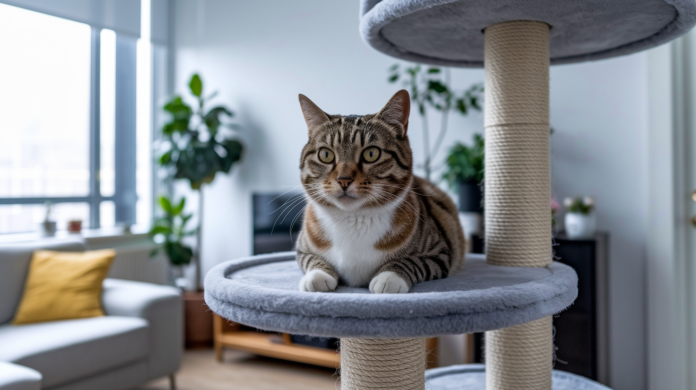
Vertical enrichment matters more in apartments than in houses. Cats need 2 to 4 perches, shelves, or cat-tree platforms in a one or two-bedroom space. Window perches are high-value real estate. They provide stimulation without you lifting a finger. Scratching posts prevent furniture damage. Place at least one near their favorite nap spot and one near the litter area. If you’re short on floor space, wall-mounted shelves work. Aim for a combined vertical and floor play footprint of 10 to 30 square feet per cat. That’s roughly one corner of a room dedicated to climbing, scratching, and interactive toys.
Daily play sessions (20 to 30 minutes) are non-negotiable for indoor cats, especially kittens. Skipping play leads to boredom behaviors. Scratching walls, knocking things off counters, 2 a.m. sprints. Rotate toys weekly to keep things interesting. If you’re gone ten hours a day, puzzle feeders and automated toys can help, but they don’t replace you.
Apartment cat setup checklist:
- Vertical space: 2–4 perches, shelves, or cat trees to maximize height
- Scratching posts or pads in at least two locations (near sleep and litter areas)
- Window perch or safe window access for stimulation
- Hiding spots or enclosed beds for retreat and security
- Toxic-plant removal and addition of cat grass for safe chewing
Adoption Guidance for Choosing Apartment-Friendly Cats

Shelter adoption fees typically run $50 to $200 per cat and often include spay/neuter, initial vaccines, and microchipping. Going through a breeder costs $500 to $2,500+ depending on breed and pedigree. Flat-faced breeds and show lines sit at the higher end. Many shelters prefer homes with outdoor access, but they’ll approve apartment adoptions for older cats, timid cats, or FIV-positive cats who need indoor-only environments. Call ahead and ask about their policies.
Spend 15 to 30 minutes with any cat before deciding. Ask the shelter or foster about the cat’s noise and activity patterns. Does it yowl at 5 a.m.? Does it pace when alone? Try to observe the cat in a quieter space, not just the noisy shelter floor. If possible, request a trial or foster period of 1 to 4 weeks. Some rescues and fosters allow this. Breeders rarely do. A trial lets you see how the cat handles your actual apartment: elevator rides, hallway foot traffic, your work schedule.
Eight practical adoption steps for apartment living:
- Meet the cat for at least 15–30 minutes. Ask about typical noise and activity levels.
- Request a short trial or foster period (1–4 weeks) to test apartment fit.
- Observe how the cat reacts to confined spaces (carrier, small room, hallway).
- Prepare your apartment before arrival: set up litter boxes (1 per cat + 1 extra), 2–3 scratching posts, 2–4 vertical perches, and a hideaway bed.
- If adopting a kitten, plan for higher activity (score +1) and 20–30 minutes of daily interactive play.
- Schedule an initial vet visit within the first week. Budget $100–$600 for vaccines, spay/neuter, and microchip if not already done.
- Ask the shelter or breeder about the cat’s history with other pets, children, and visitors. Apartment life often means closer quarters with guests.
- Confirm your building’s pet policy in writing, including any breed restrictions, weight limits, and pet deposit requirements before finalizing adoption.
Final Words
You’ve got the traits that matter, a ranked list of friendly breeds, a quick comparison, setup tips, and adoption steps to follow.
Apartment-suitable cats tend to be quieter, lower-energy, and easier to groom. The guide walked through Ragdoll, British Shorthair, Persian, Sphynx and others, plus how to make small spaces work with perches and litter rules.
Decide by routine: if you want calm and low maintenance, favor the quieter breeds; if you want a talkative companion, expect more play and noise. You’re closer to finding the best cat breeds for apartments that fit your life. Go meet a few!
FAQ
Q: What cat is best for an apartment?
A: The best cat for an apartment is one with low-to-moderate activity, low vocalization, and minimal grooming, such as British Shorthair, Ragdoll, Russian Blue, or Chartreux, which adapt well to small spaces.
Q: What is the 3-3-3 rule for cats?
A: The 3-3-3 rule for cats means three days to adjust at a shelter, three weeks to settle into a new home, and three months to show full personality, helping set realistic adoption expectations.
Q: What annoys cats the most?
A: What annoys cats the most are sudden changes, unwanted handling, loud noises, dirty litter boxes, and disrupted routines; addressing these reduces stress and prevents problem behaviors.
Q: What is the most low maintenance cat?
A: The most low maintenance cat is usually a short-haired, calm breed—like British Shorthair, American Shorthair, or Chartreux—needing weekly grooming, moderate play, and tolerating alone time better than active breeds.