

You don’t need a house to give a cat a great life.
Some breeds are calm, low energy, and content curled on a sunny windowsill.
If you live in an apartment, what you actually want is a cat that adapts to compact routines, not one that needs a backyard worth of sprinting room.
This post highlights breeds that tend to do well in small spaces—think British Shorthair, Ragdoll, Burmese, Scottish Fold, Russian Blue, and Sphynx—and why they work at home.
I’ll also point out the trade-offs, like grooming, attention needs, and noise, so you can decide with confidence.
Best Cats for Small Living Spaces
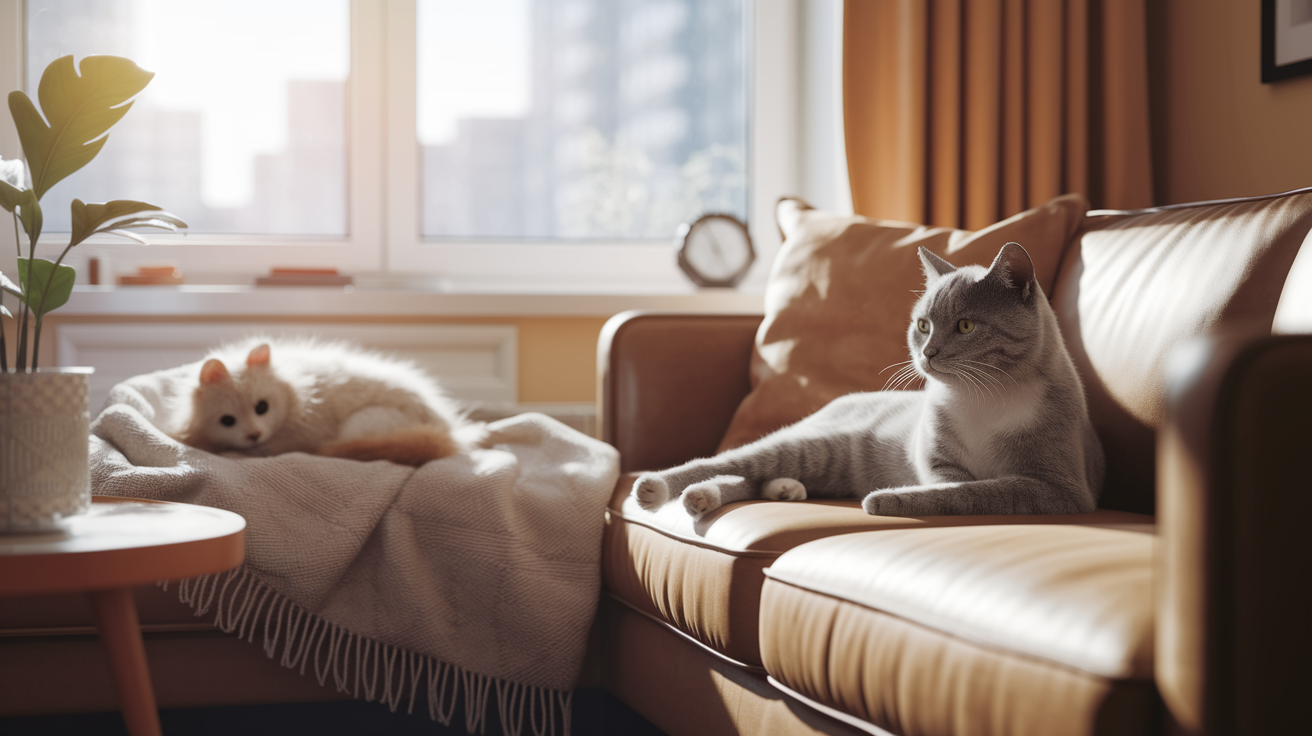
Not every cat needs room to roam. Some breeds are naturally calm, moderately active, and perfectly happy spending their days curled up on a sofa or perched near a sunny window. If you’re choosing a cat for an apartment, condo, or small house, you want a breed that adapts to compact environments without stress, noise complaints, or constant restlessness.
The following breeds are known for thriving in small homes:
British Shorthair – Calm, independent, low energy. They’re happy to lounge for hours and don’t demand constant attention or large spaces to burn off energy.
Ragdoll – Large but exceptionally gentle. They follow their owners around and prefer human company over roaming, which makes them well suited to smaller homes despite their size.
Burmese – People oriented and affectionate. They stay close to their humans rather than seeking out wide open territory, so they adapt easily to compact living.
Scottish Fold – Laid back and low activity. They enjoy quiet environments and are content in small spaces with cozy spots to nap.
Russian Blue – Reserved and routine loving. They’re quiet, low maintenance, and comfortable in predictable, smaller environments.
Sphynx – Hairless and heat seeking. They prefer staying warm and close to people, which makes them naturally suited to indoor, apartment style living.
These breeds share a common thread. They don’t need large square footage to feel secure or entertained. They’re built for calm, indoor life and adapt well to the routines of smaller spaces.
Key Traits That Make a Cat Suitable for Small Spaces
Temperament matters more than size when it comes to small home compatibility. A cat that’s naturally calm, adaptable, and moderately active will settle into a compact environment without developing stress behaviors or destructive habits. Breeds that are people oriented but not overly dependent tend to do best. They enjoy companionship but don’t panic when their owner steps out for work.
Activity level is another major factor. Cats that require constant movement, climbing, or wide open sprints are harder to keep happy in limited square footage. Low to moderate energy breeds are content with short bursts of play and long stretches of rest, which fits the rhythm of apartment living.
Noise level also plays a role, especially in shared housing. Some breeds are naturally chatty and vocal, which can become a problem if you have thin walls or noise sensitive neighbors. Quieter, more reserved cats like the Russian Blue or British Shorthair tend to be better fits for urban or multi unit buildings where sound carries.
Popular Apartment‑Friendly Breeds in Detail

British Shorthair
The British Shorthair is one of the most low maintenance breeds for small spaces. They’re calm, independent, and not particularly needy. They don’t demand constant interaction or entertainment, and they’re perfectly happy spending most of the day napping or quietly observing from a favorite perch. Their short coat requires minimal grooming. Weekly brushing is usually enough. They don’t tend to be vocal or hyperactive.
These cats are built for routine. They adapt well to predictable schedules and don’t get easily stressed by apartment life. They’re not lap cats in the traditional sense, but they enjoy being near their owners. If you work during the day and want a cat that won’t be anxious alone, the British Shorthair is a solid choice. They weigh between 9 and 18 pounds and typically live 12 to 20 years.
Ragdoll
Ragdolls are large, often over 15 pounds, but their temperament makes them surprisingly well suited to smaller homes. They’re docile, affectionate, and follow their owners from room to room rather than roaming independently. They’re known for going limp when picked up, which is where the name comes from, and they prefer human company over solo exploration.
Despite their size, they’re low energy cats. They enjoy short play sessions but are just as happy lying on the couch or watching you work. Their semi long coat does require grooming two to three times a week to prevent mats, but they’re generally tolerant of brushing. Ragdolls are people focused, so they do best in homes where someone is around regularly. They’re not the best fit if you’re gone for long stretches, but they’re ideal for apartment dwellers who work from home or have a predictable routine.
Burmese
Burmese cats are highly social and bond closely with their owners. They’re affectionate, curious, and prefer staying near people rather than roaming large spaces. They’re moderately active, more playful than a British Shorthair but far less demanding than a Bengal, and they adapt well to compact living as long as they get regular interaction.
These cats are not independent. They want attention, and they’ll follow you around, “help” with tasks, and curl up next to you whenever possible. If you live alone or in a small household and want a cat that feels like a companion, the Burmese is a strong match. They’re also relatively low maintenance in terms of grooming. Weekly brushing is usually enough. They’re not especially vocal. They weigh between 8 and 12 pounds and typically live 10 to 16 years.
Care Tips for Cats Living in Small Homes

Cats in small spaces don’t need less care. They need smarter care. Enrichment becomes critical when your cat doesn’t have a hallway to sprint down or a yard to watch. Without structured play and mental stimulation, even calm breeds can develop boredom behaviors like scratching furniture, knocking things off counters, or meowing at odd hours.
Daily routines that work well in apartments:
Two interactive play sessions per day, 10 to 15 minutes each. Use a wand toy or laser pointer to simulate hunting. This wears them out and satisfies their natural instincts.
Rotate toys weekly. Cats lose interest in the same toys quickly. Rotating them keeps the environment fresh without needing to buy new things constantly.
Provide vertical climbing options. Shelves, cat trees, or wall mounted perches increase usable territory without taking up floor space.
Place scratching posts near favorite lounging spots. Cats scratch to mark territory and stretch. Putting posts where they already hang out reduces furniture damage.
Follow the litter box rule: one per cat, plus one extra. In a one cat apartment, that means two boxes, ideally placed in different areas to give the cat options.
Grooming schedules depend on coat type. Shorthaired cats like the Russian Blue or British Shorthair need weekly brushing. Breeds with semi long coats, like the Ragdoll, need grooming two to three times a week. Hairless breeds like the Sphynx require weekly baths and regular skin care to manage oil buildup.
How to Optimize Space for an Indoor Cat
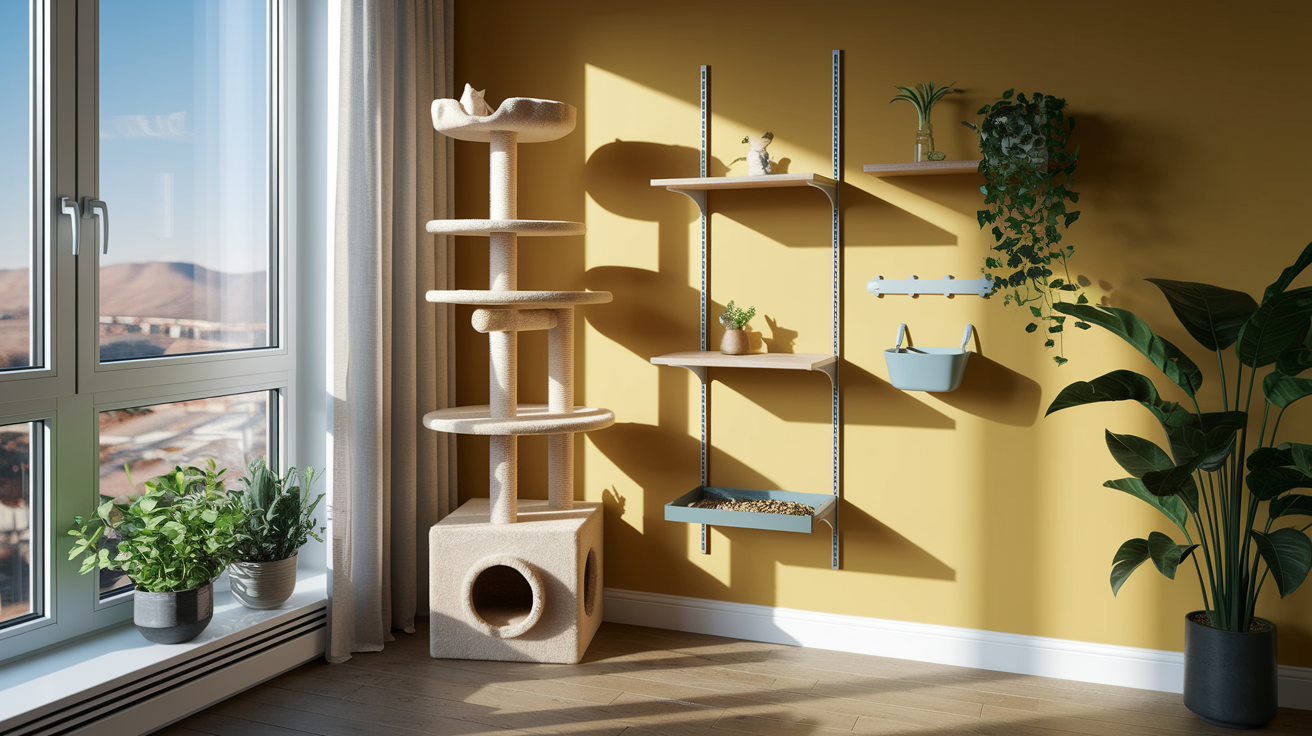
Small apartments don’t feel small to a cat if you use vertical space well. Cats naturally seek elevated perches to observe their territory and feel secure. Adding even one or two high spots, like a wall mounted shelf or a compact cat tree, dramatically increases the environment’s usability.
Practical ways to maximize space:
Install at least one elevated perch per cat, ideally near a window. Cats spend hours watching birds, pedestrians, and street activity. It’s free enrichment.
Use stackable or multi level furniture. A tall, narrow cat tree takes up less floor space than a sprawling one and still gives your cat multiple levels to explore.
Keep feeding stations, water bowls, and litter boxes separated. Cats prefer these areas apart. In a studio apartment, place the litter box in the bathroom and food in the kitchen or opposite corner.
Provide at least one scratching post per cat, plus one extra. Vertical posts work well in tight spaces. Place them near sleeping areas or windows where your cat already spends time.
Strategically placed furniture also matters. Cats feel safer when they have clear sightlines and easy exit routes. Avoid blocking windows or corners where your cat likes to sit. If your apartment layout allows it, create small “zones,” a feeding area, a litter area, and a play/rest area, to mimic the way cats naturally divide territory.
Final Words
You’ve got the shortlist: British Shorthair, Ragdoll, Burmese, Scottish Fold, Russian Blue and Sphynx, plus the traits that help them thrive in small homes—calm energy, low noise and independence. The article also covered three breeds in more detail, practical care tips, and simple ways to add vertical territory so your cat won’t feel trapped.
If you want an apartment match, focus on those traits, plan enrichment and honest grooming routines. Choose from cat breeds that don’t need much space and you’ll likely end up with a calm, healthy indoor companion.
FAQ
Q: What is the 3-3-3 rule of cats?
A: The 3-3-3 rule of cats describes adjustment stages: three days hiding and settling in, three weeks exploring and bonding, and three months before most cats feel fully secure and routine-ready.
Q: What cat breed needs the least attention / What is the calmest cat breed / What cat breed can be left alone?
A: Breeds needing the least attention, that tend to be calm and tolerate alone time, include British Shorthair, Russian Blue, and Chartreux; they’re independent, low-energy, and do well with predictable routines.