

Think you can’t have a cat because of allergies?
Not exactly true.
No cat is fully hypoallergenic, but some breeds shed less or make less of the Fel d 1 protein, so they tend to work better in small apartments.
This guide covers six breeds: Siberian, Russian Blue, Cornish Rex, Devon Rex, Sphynx and Balinese.
I’ll explain what living with each one really looks like.
Grooming, daily routine, noise, and how much cleaning you’ll need.
Read on to pick the one that fits your space and sniffles.
Apartment-Friendly Low-Allergen Cat Options That Best Fit Small Spaces
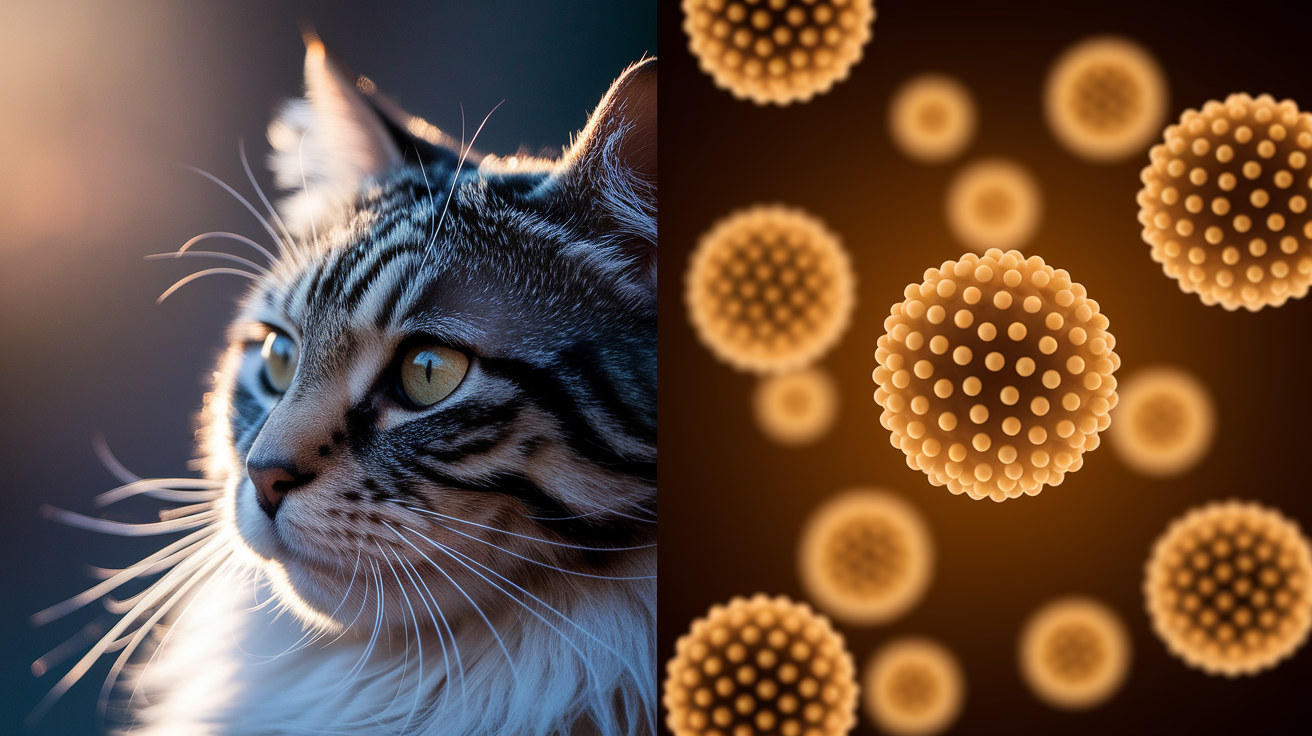
No cat is completely hypoallergenic. Every cat produces Fel d 1, a protein in saliva and skin oils. When they groom, they spread it across their fur, then shed hair and dander into the air. In a small apartment, that allergen load circulates more intensely because there’s less room for it to go anywhere. The term “hypoallergenic” is relative. It means the cat might produce less allergen or shed less hair, lowering your daily exposure. But it never drops to zero.
Six breeds work better for allergy conscious apartment dwellers:
Siberian often produces lower Fel d 1 levels than many breeds, even with a thick coat.
Russian Blue sheds intermittently and many people with mild allergies report fewer reactions.
Cornish Rex has no guard hairs, so less fur traps dander and spreads through the air.
Devon Rex has a single undercoat that sheds minimally and produces less loose hair.
Sphynx is hairless, so no fur carries allergens around the home, though skin oils still contain Fel d 1.
Balinese is long haired but produces less Fel d 1 than many other breeds.
These breeds adapt well to apartment life for reasons beyond allergen output. Most have moderate to calm temperaments, they don’t need a backyard, and their grooming routines are manageable in a small bathroom or living room. Lower shedding means fewer hair tumbleweeds in corners and less allergen floating in recycled apartment air. Pairing a low shed breed with consistent grooming and cleaning routines can cut your allergen exposure by 30 to 70 percent, making apartment living with cat allergies far more realistic.
Allergen Sources in Cats and Their Impact on Apartment Living
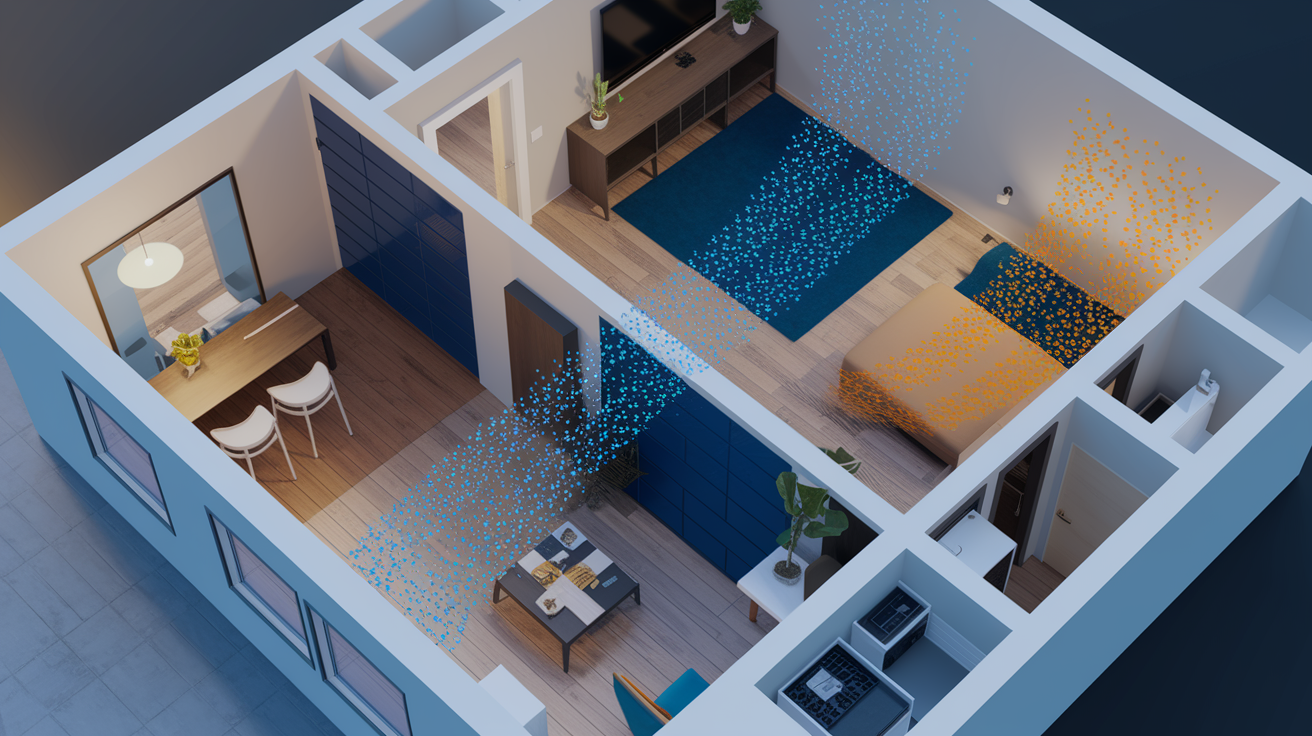
The main culprit behind cat allergies is Fel d 1, a protein secreted in saliva and skin oils. Every time your cat licks its paws, washes its face, or scratches behind its ears, it spreads that protein across its coat. When the fur dries, tiny flakes of dander peel off and become airborne. In a large house, those particles can settle in unused rooms or get flushed out through open windows. In a 600 square foot apartment, they recirculate through the same air you breathe all day.
Hairless cats don’t solve the problem completely. They still produce Fel d 1 in their skin oils and saliva. Without fur, allergens don’t travel as easily on loose hair, but they can build up on the cat’s skin and transfer to your hands, furniture, and clothing when you pet or hold the cat. In tight quarters, every surface you touch becomes a potential exposure point. That’s why apartment dwellers need to think about allergen sources holistically, not just hair.
Allergens accumulate faster in small living spaces because limited air volume means a single cat can saturate a small apartment’s air faster than a multi room house. Shared surfaces in a studio or one bedroom mean the couch, bed, and dining area are close together, so dander spreads quickly. HVAC recirculation through central air or window units blows allergens around instead of exhausting them outdoors. And fewer barriers, with no doors between rooms, means allergens flow freely from litter box to sleeping area.
Key Traits That Influence Allergen Levels and Apartment Compatibility

Fel d 1 Production Variability
Not all cats produce the same amount of Fel d 1. Studies show individual protein output can vary by a factor of ten, even within the same breed. A Siberian from one bloodline might trigger mild sniffles, while another Siberian could cause full symptoms. Some breeders test their breeding cats for Fel d 1 levels and advertise low producing lines, but there’s no industry standard or registry requirement. The only way to know your personal reaction is direct exposure to that specific cat. Kitten allergies can also differ from adult allergies because hormone changes after neutering or spaying can shift protein levels. If you’re apartment shopping for a hypoallergenic cat, plan to meet the actual animal, not just the breed name.
Coat Type and Allergen Spread
Coat structure determines how allergens move through your home. A double coated cat like the Siberian has dense guard hairs and a thick undercoat that can trap dander close to the skin, reducing how much becomes airborne. At least until shedding season. Single coated breeds like the Cornish Rex or Devon Rex lack that heavy undercoat, so less loose fur floats around. Curly or wavy coats (Rex breeds) hold onto dander better than straight fur, keeping more allergen attached to the cat until you brush it out. Hairless cats skip the fur entirely, so allergens stay on the skin surface until you wipe or bathe them. In a small apartment, less airborne fur means fewer allergens landing on your couch cushions and clean laundry.
Grooming Requirements and Allergen Transfer
Frequent grooming pulls allergen loaded saliva and loose dander off the cat before it spreads. Brushing a Russian Blue twice a week removes dead hair and dried saliva flakes, lowering the allergen reservoir in your apartment. Hairless cats need weekly baths because their skin oils build up without fur to absorb them. Those oils contain Fel d 1, and letting them accumulate turns the cat into a walking allergen sponge. Bathing a furred cat every four to six weeks can cut surface allergen levels noticeably, but not all cats tolerate baths, so test early. Using allergen neutralizing wipes two to three times a week is a middle ground option that many cats accept better than a full bath. Every grooming session transfers allergens from the cat to a brush, towel, or sink. Clean those tools immediately so you’re not just moving allergens around.
Shedding Patterns and Indoor Air Circulation
Low shedding breeds release fewer hair borne allergens into apartment air. Devon and Cornish Rex cats shed so little you might go days without seeing loose hair. Russian Blues shed intermittently rather than constantly, so allergen spikes are predictable and manageable. Siberians have seasonal blowouts. Twice a year, their undercoat sheds heavily for one to two weeks. During those windows, daily brushing is essential to keep hair and dander from carpeting your apartment. In a small space, even a moderate shedder can overwhelm air quality if you skip vacuuming for a week. Apartment HVAC systems recirculate the same air, so any loose hair gets pulled into vents and blown back out. Low shedding breeds reduce that cycle, giving HEPA filters a fighting chance to keep up.
Temperament and Space Utilization
Calm, adaptable cats fit apartment life better than anxious or hyperactive ones, and temperament also affects allergen management. A cat that tolerates handling and grooming makes brushing and bathing easier, which directly lowers allergen levels. Social breeds like the Sphynx and Balinese enjoy human company and adapt quickly to small living spaces, but they can be vocal and demanding. Expect morning wake up calls and constant companionship. The Russian Blue is famously shy with strangers but bonds deeply with its owner, making it ideal for a quiet one person apartment. Independent cats may hide under the bed during cleaning, while social ones will sit in your lap while you vacuum. Both behaviors influence how well you can maintain an allergen free zone.
Activity Level and Environmental Enrichment Needs
High energy cats need more vertical space and daily play to stay calm in a small apartment. A bored Cornish Rex or Devon Rex will invent trouble. Knocking things off counters, unrolling toilet paper, or yowling at 3 a.m. Allocating 20 to 30 minutes of interactive play per day burns off that energy and reduces stress driven behaviors. Lower activity cats like the Russian Blue are content with a window perch and a weekly game of feather wand, making them easier to manage in a studio or one bedroom. Activity level also affects allergen spread. An athletic cat racing around your apartment kicks up more dander and loose hair than a cat napping on a shelf. Providing scratching posts and climbing trees channels that energy vertically instead of horizontally, keeping allergens more contained.
Grooming and Allergen Reduction Practices for Hypoallergenic Apartment Cats
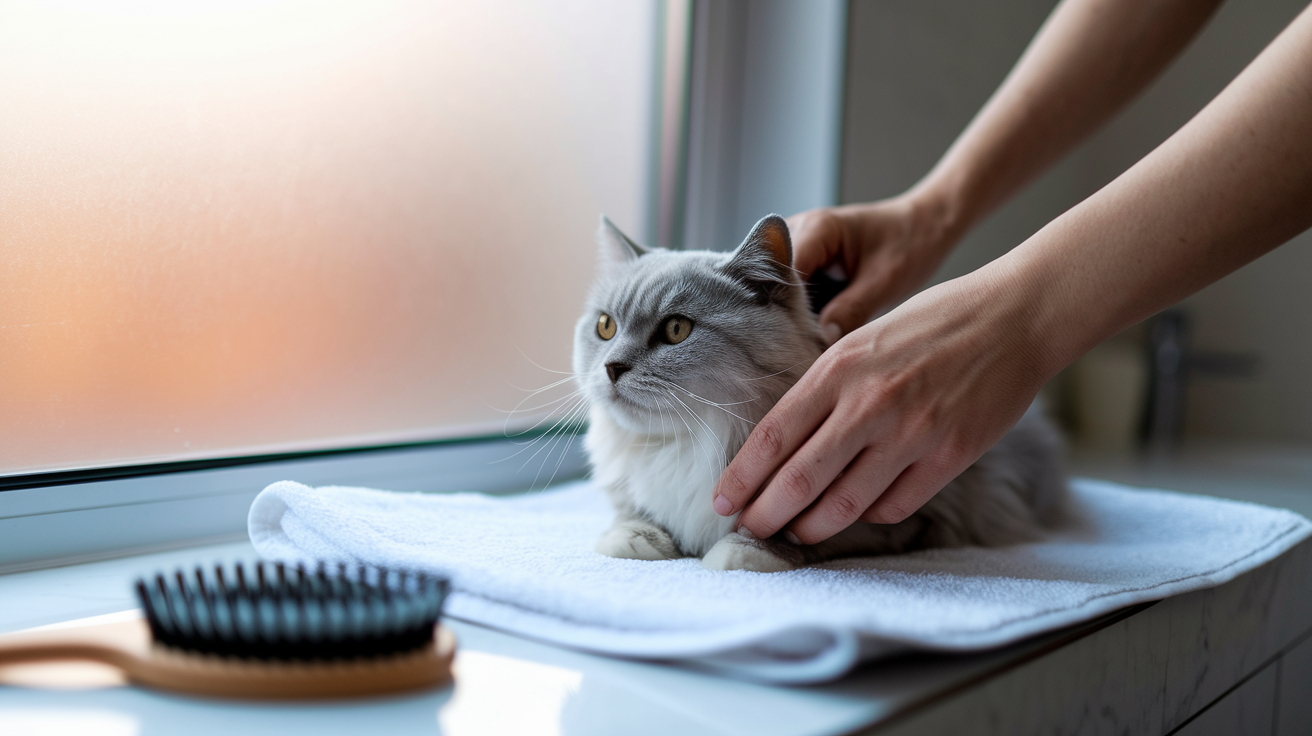
Grooming is the single most effective tool for reducing allergen load in a small apartment. Brushing pulls loose hair and dried saliva off the coat before it becomes airborne. For low shedding breeds like the Cornish Rex or Devon Rex, once a week brushing is enough. Russian Blues benefit from two sessions per week to keep their dense double coat under control. During seasonal blowouts, common in Siberians, brush daily for one to two weeks to catch the undercoat as it sheds. Skipping grooming during heavy shed windows can double the allergen count in your apartment within days.
Bathing a cat reduces surface allergens dramatically, but not all cats tolerate water. The Sphynx requires weekly baths to remove oil buildup on its skin. Skip a bath and those oils (full of Fel d 1) transfer to every surface the cat touches. For furred cats, a bath every four to six weeks can cut allergen levels by 30 to 50 percent for several days. Use lukewarm water and a hypoallergenic cat shampoo. Hot water dries out skin and can increase dander production. If your cat refuses baths, allergen neutralizing wipes are a practical alternative. Wipe down the coat two to three times a week, focusing on the head, neck, and back where grooming saliva concentrates. Some wipes contain proteins that bind to Fel d 1, deactivating it before it spreads.
Grooming practices that lower allergens in apartments include using a rubber curry brush or microfiber mitt. These tools trap dander and loose hair better than wire slicker brushes, which can scatter particles into the air. Groom outdoors or in a bathtub to keep allergen loaded hair contained instead of floating through your living room. Bathe during low activity times. Cats are calmer in the evening, making bath time less stressful and reducing the chance of scratching. Dispose of brushed hair immediately by sealing it in a small plastic bag and throwing it in an outdoor trash bin. Don’t let it sit in your apartment trash. Adjust grooming frequency with the seasons. Increase brushing during spring and fall when daylight changes trigger coat turnover.
Allergy Testing and Trial Adoption Steps Before Choosing a Low Allergen Breed

Before you adopt, confirm your specific sensitivity level with a medical test. Allergists offer two main options: a skin prick test, which delivers results in about 20 minutes during the office visit, or a specific IgE blood test, which takes a few days but doesn’t require needle pricks on your arm. Both tests measure your immune response to Fel d 1, giving you a baseline to compare against after you bring a cat home. If your test shows severe sensitivity, a low allergen breed might still trigger symptoms, and you’ll need to combine the cat with aggressive cleaning and possibly medication. Mild sensitivity gives you more flexibility. Many people with low reactivity do fine with a Russian Blue or Siberian and weekly vacuuming.
A home trial is the only reliable way to know if you and a specific cat are compatible. Foster organizations and some breeders allow two to four week trials before finalizing adoption. Two weeks is the minimum. It takes that long for allergen levels to build up in your apartment and for your immune system to show a consistent response. Four weeks is better because it covers variability in your own allergies (seasonal pollen can overlap with cat reactions) and lets you test different cleaning routines. During the trial, track your symptoms daily using a simple 0 to 10 scale for sneezing, itchy eyes, congestion, and skin reactions. If symptoms stay below 3 after two weeks, you’re likely compatible. If they climb above 5 and don’t improve with cleaning, returning the cat is the honest choice.
Allergy testing and trial adoption steps start with scheduling an allergy test. See an allergist for a skin prick or blood test. Results guide which breeds to consider and whether medication might be necessary. Arrange a foster trial by contacting rescues or breeders that allow 2 to 4 week trials. Meet the cat in person before committing. Track symptoms daily using a notebook or phone app to score sneezing, congestion, eye irritation, and skin reactions from 0 (none) to 10 (severe). Adjust your environment during the trial by adding a HEPA purifier, vacuuming twice in the first week, and keeping the bedroom door closed to isolate variables and see what works.
Apartment Setup for Minimizing Cat Allergens

A small apartment requires intentional design to control allergens. Start with a HEPA air purifier rated for your square footage. Most apartments under 500 square feet need a unit with a Clean Air Delivery Rate (CADR) of 200 to 300. Place the purifier in your main living area and run it continuously. Allergens are lightest in the morning after the air has settled overnight, so start it before you wake up. Change HEPA filters every six to twelve months, depending on the manufacturer’s schedule. A clogged filter recirculates allergens instead of trapping them.
Litter box placement affects allergen spread more than most people expect. Follow the rule of one box per cat plus one extra, so a single cat apartment needs two boxes. Place them in separate areas if your layout allows. One in the bathroom and one in a closet with a cracked door, for example. Clumping litter produces less airborne dust than clay, and low dust or silica gel formulas cut particulate exposure even further. Scoop daily and fully change litter weekly to prevent ammonia buildup, which can irritate airways and make allergy symptoms feel worse.
Vertical space gives your cat places to climb and rest without spreading allergens across floor level furniture. A cat tree 4 to 6 feet tall provides climbing exercise and keeps the cat off your couch and bed during the day. Wall mounted shelves work well in studios where floor space is tight. Install two to three perches at staggered heights so the cat can jump between them. Scratching posts should be 28 to 32 inches tall for a full body stretch. Place one vertical post near the cat tree and one horizontal scratcher in the main living area. Scratching redirects claw maintenance away from upholstered furniture, which traps allergens in fabric and is hard to clean.
| Feature | Recommended Frequency/Measurement | Allergen Benefit |
|---|---|---|
| HEPA air purifier | CADR 200–300; run continuously; replace filter every 6–12 months | Captures airborne dander and hair before it settles on surfaces |
| Vacuuming (HEPA filter vacuum) | 2–3 times per week on high-traffic carpet and fabric furniture | Removes settled allergens before they re-aerosolize |
| Laundry (bedding, throws, cat blankets) | Weekly wash at 60°C (140°F) or hottest safe setting | Heat denatures Fel d 1 protein and flushes allergens from fabric |
| Litter box setup | 1 box per cat + 1 extra; scoop daily, full change weekly | Reduces ammonia and dust that irritate airways and amplify allergy symptoms |
Allergen Reduction Cleaning Routines for Small Homes

Allergen control in a small apartment depends on removing particles before they recirculate. Vacuum high traffic areas two to three times per week using a vacuum with a sealed HEPA filter. Bagless models can release allergens back into the air when you empty the canister, so choose a bagged model if possible. Focus on carpet, area rugs, and upholstered furniture where dander settles. Bare floors should be damp mopped once per week. Dry sweeping or using a Swiffer style duster just kicks allergens into the air temporarily.
Dust all flat surfaces weekly using a damp microfiber cloth. Dry dusting with a feather duster or paper towel sends particles airborne, where they resettle minutes later. Wipe down windowsills, shelves, and the top of your TV or microwave. Cat dander is sticky and clings to horizontal surfaces. Don’t forget high shelves and the tops of cabinets. Allergens float upward on warm air currents and accumulate in places you rarely see.
Essential allergen reduction cleaning tasks include vacuuming carpet and fabric furniture 2 to 3 times per week. Use slow, overlapping passes to give the HEPA filter time to capture fine particles. Damp mop bare floors once per week. A basic mop with warm water is enough. Avoid cleaners with strong fragrances that can irritate sensitive airways. Wash throw blankets, cat beds, and your own bedding weekly. Use the hottest water safe for the fabric, ideally 60°C (140°F), to denature Fel d 1 protein. Wipe down surfaces with a damp microfiber cloth weekly. Pay special attention to areas near the litter box, food bowls, and wherever the cat naps.
Essential Enrichment and Exercise Needs for Hypoallergenic Apartment Cats
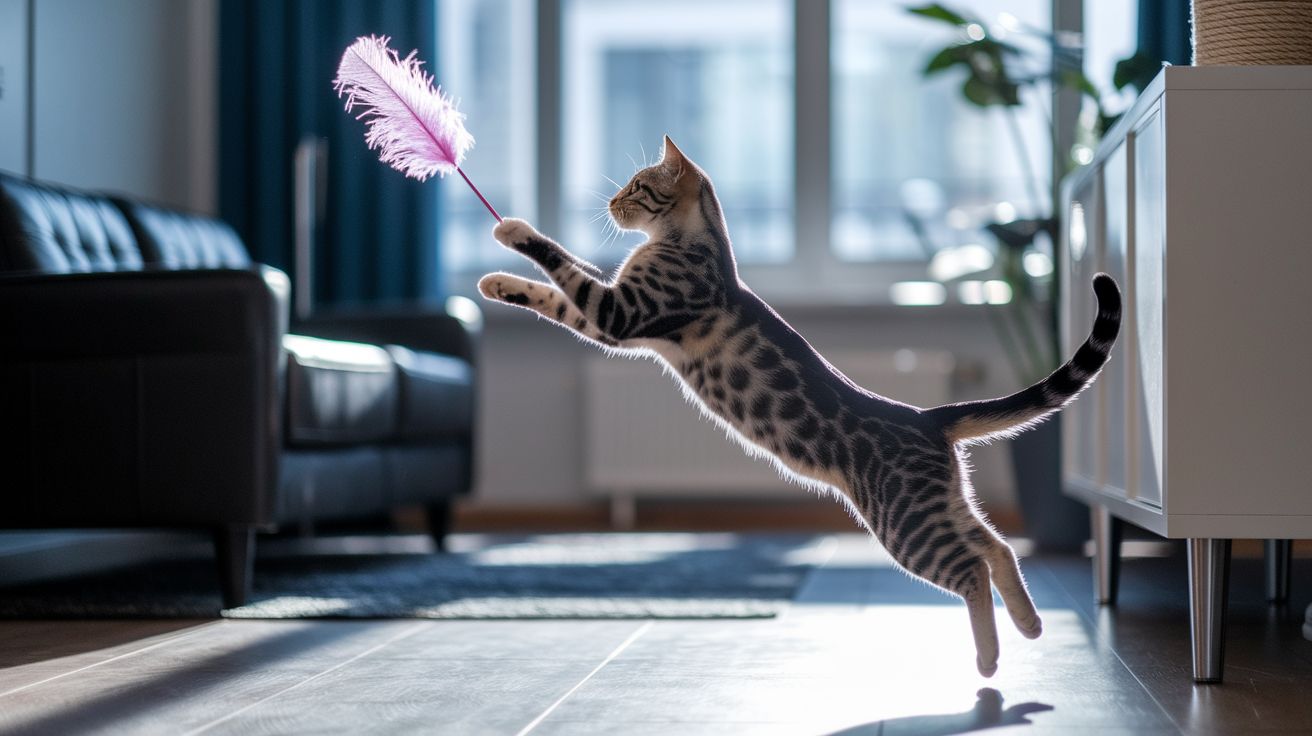
Even low allergen cats need daily activity to stay healthy in a small apartment. Plan for 20 to 30 minutes of interactive play per day using a feather wand, laser pointer, or crinkle ball. Break it into two sessions, 10 to 15 minutes in the morning and again in the evening, to match a cat’s natural hunting rhythm. High energy breeds like the Cornish Rex, Devon Rex, and Balinese will demand more. If you skip exercise for two days, expect 3 a.m. zoomies and climbing curtains. Lower energy breeds like the Russian Blue are more forgiving but still need at least 15 minutes to prevent boredom.
Scratching posts give your cat an outlet for claw maintenance and stretching. Install at least two posts. One vertical post 28 to 32 inches tall and one horizontal scratcher. Place the vertical post near a favorite napping spot so the cat can stretch after waking up. Horizontal scratchers work well near entryways or under windows. Cats that skip scratching posts will target your couch or carpet, shredding fabric that’s already hard to clean of allergens.
Enrichment and exercise essentials include interactive play for 20 to 30 minutes daily. Use toys that mimic prey movement. Rotate toys weekly to keep interest high. Scratching posts, 2 to 3 per apartment, should include one vertical (28 to 32 inches tall) and one horizontal. Cover with sisal or cardboard. Vertical climbing space of 4 to 6 feet of height can be a cat tree, wall shelves, or a bookcase the cat can safely access. Puzzle feeders used for 10 to 20 minutes per day slow feeding, reduce boredom, and give the cat a mental task beyond napping.
Cost, Health, and Lifespan Considerations for Hypoallergenic Apartment Breeds

Lifespan and long term health costs vary across low allergen breeds. Russian Blues are famously long lived, often reaching 15 to 20 years with routine vet care. Siberians typically live 11 to 18 years, and Balinese fall in the 10 to 15 year range. Rex breeds (Cornish and Devon) have shorter averages, 9 to 15 years, partly due to genetic health issues in some lines. The Sphynx has the shortest typical lifespan, 8 to 14 years, and higher rates of heart disease (hypertrophic cardiomyopathy) that require echocardiogram screening. When you’re committing to an apartment cat, a 15 year lifespan means 15 years of rent friendly housing, regular vet visits, and allergen management.
Annual veterinary costs for a healthy indoor cat run $100 to $300 for vaccines, a wellness exam, and fecal testing. Add another $200 to $400 if your cat needs dental cleaning or bloodwork as they age. Emergency care or chronic conditions (common in Sphynx and some Rex lines) can cost $500 to $2,000 per incident. Pet insurance premiums for cats typically range from $15 to $40 per month depending on coverage, age, and breed. Sphynx and purebred Siberians may cost more to insure due to known health risks.
Long term cost and health summary shows the Russian Blue at 15 to 20 years has low ongoing health costs and is generally hardy with few breed specific issues. Siberian at 11 to 18 years has moderate grooming costs during shedding season and occasional screening for heart issues in some lines. Balinese at 10 to 15 years has few major health concerns, though regular dental care is important due to Siamese type ancestry. Cornish and Devon Rex at 9 to 15 years have some lines prone to heart disease and skin issues. Budgeting for potential echocardiograms or dermatology visits is wise. Sphynx at 8 to 14 years has the highest grooming needs (weekly baths) and higher risk of hypertrophic cardiomyopathy. Expect regular vet screening and possibly higher insurance premiums.
Comparison Chart of Top Hypoallergenic Apartment Breeds
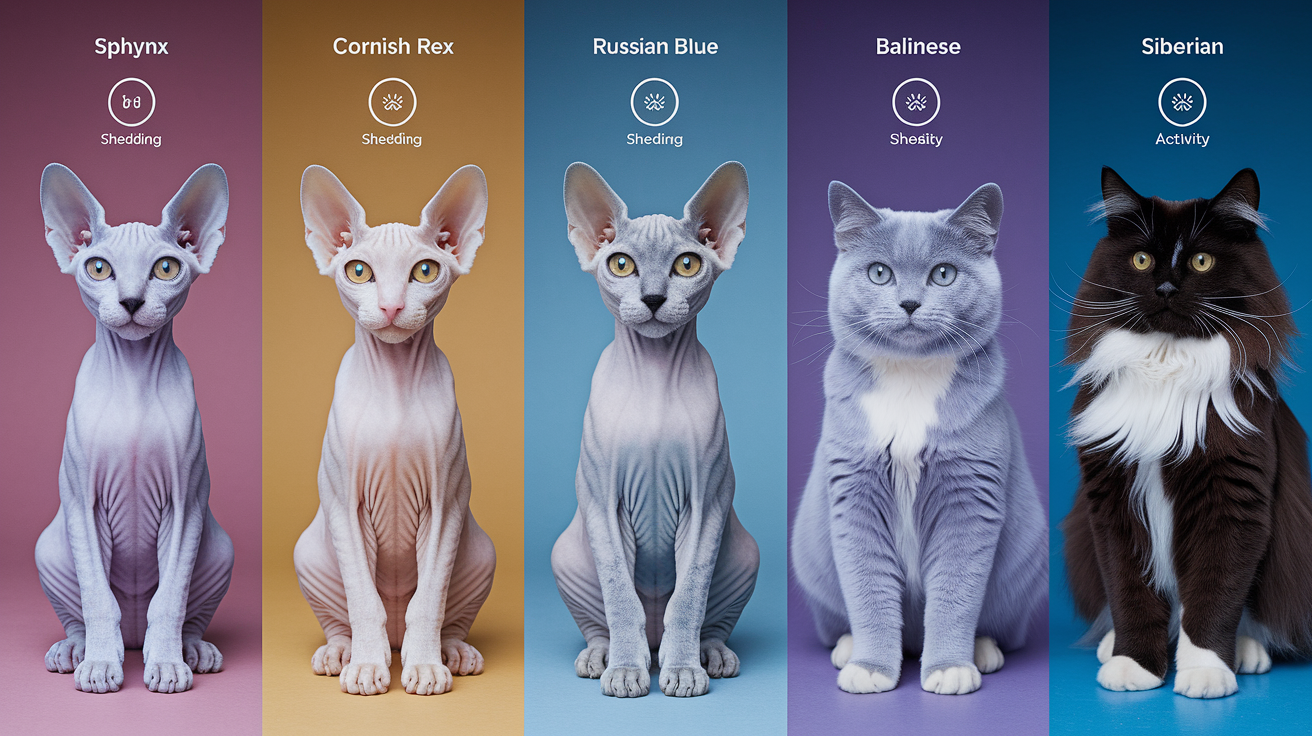
This table ranks six commonly recommended low allergen apartment breeds across four practical dimensions. Allergen level and shedding are scored 0 (lowest) to 5 (highest), activity level is 1 (calm) to 5 (high energy), and apartment suitability is 1 (challenging) to 5 (ideal fit). Individual cats vary, but these ranges reflect typical breed tendencies reported by owners and breeders.
| Breed | Allergen Level (0–5) | Shedding Level (0–5) | Activity Level (1–5) | Apartment Suitability (1–5) |
|---|---|---|---|---|
| Sphynx | 1–2 | 0 | 3–4 | 5 |
| Cornish Rex | 1–2 | 1 | 4 | 4 |
| Devon Rex | 1–2 | 1 | 4 | 4 |
| Russian Blue | 2 | 2–3 | 2–3 | 5 |
| Balinese | 2 | 2 | 4 | 3–4 |
| Siberian | 2–3 | 2–4 (seasonal) | 3 | 4 |
The Sphynx and both Rex breeds score lowest for allergen production and shedding, making them top choices if your allergies are moderate to severe. The trade off is higher activity. Cornish and Devon Rex cats need daily interactive play and vertical climbing space, or they’ll entertain themselves by knocking things off counters. The Sphynx requires weekly baths, which adds a maintenance task most other cats don’t need. Russian Blue offers the best balance for calm apartment living and allergen control, though its double coat sheds more than a Rex. Balinese cats are beautiful and lower allergen, but their energy and vocal Siamese personality can be overwhelming in a studio apartment. Siberians sit in the middle. Moderate allergen production, seasonal heavy shedding, but adaptable and friendly enough for most apartment layouts if you commit to grooming during blowout weeks.
Final Words
We named six low-allergen breeds, explained why Fel d 1 matters, and ran through grooming, cleaning, testing, and apartment setup steps to lower allergens in small homes.
Think temperament, shedding, and energy first: Russian Blue and Siberian tend to be calmer, Rex breeds and Sphynx are playful and low-shed. The trade-off: some need weekly baths or more playtime. That’s the real choice.
Try a short home trial, track symptoms, and set up HEPA, laundry, and a no-cat bedroom with hypoallergenic cat breeds for apartments in mind. You’ll be better prepared—and happy—when you bring one home.
FAQ
Q: What cat breeds are 100% hypoallergenic?
A: No cat breeds are 100% hypoallergenic; all produce the Fel d 1 allergen. Breeds that often trigger fewer symptoms include Siberian, Sphynx, Russian Blue, Cornish Rex, Devon Rex, and Balinese.
Q: What breed of cat is best for apartment living?
A: The best apartment cat breeds are calm, low-shedding types that adapt to indoor life—Russian Blue, Siberian, Balinese, Cornish Rex, Devon Rex, and Sphynx commonly suit small homes.
Q: What is the cheapest hypoallergenic cat?
A: The cheapest hypoallergenic option is usually a rescue or local mixed-breed with low-shedding traits; adopting from a shelter is typically far cheaper than buying a specific pedigree breed.
Q: What is the calmest indoor cat?
A: The calmest indoor cats tend to be low-energy breeds like the Russian Blue or older Siberians; individual personality and age usually matter more than breed for steady, apartment-friendly behavior.